
What You'll Learn
- Identify a reversal-quality sweep at meaningful liquidity.
- Wait for observable rejection and displacement before entry.
- Place invalidation beyond the failed thesis and select realistic targets.
Elev8+ Sweep Reversal Playbook: Trading The Failed Breakout
One of the core advantages of Elev8+ is that you can wait until a liquidity event has already occurred before deciding whether a reversal is actually developing. Instead of guessing tops or bottoms, you wait for price to run meaningful liquidity, fail to continue, reclaim structure, and confirm with a triangle reversal or LS label. This keeps execution tied to observable price behavior and defined invalidation rather than reacting to every breakout or wick with no plan.
Framework mindset: The Failed Breakout
The goal is not to assume every breakout was designed to trap traders and then fade back into the range. Elev8+ is designed to help you identify when a breakout actually fails—and participate only after rejection, structure, and risk are defined.
What Makes a Qualified Sweep? (The 4 Criteria)
A qualified reversal-quality sweep usually has four important characteristics. Together they help distinguish failed continuation from genuine acceptance:
- Location: Price trades through meaningful external liquidity (ideally a major Elev8+ sweep level or HTF reference).
- Participation: Price reaches the level with enough activity or displacement to make the liquidity event meaningful.
- Failed Continuation: Price cannot sustain progress beyond the level and begins reclaiming or responding in the opposite direction.
- The Structure: Price reclaims / displaces back inside and ideally breaks or shifts nearby micro structure.
Context matters. Higher-quality sweeps often occur at Prior Day High/Low, Overnight or Session highs/lows, Weekly/Monthly extremes, or protected higher-timeframe swings.
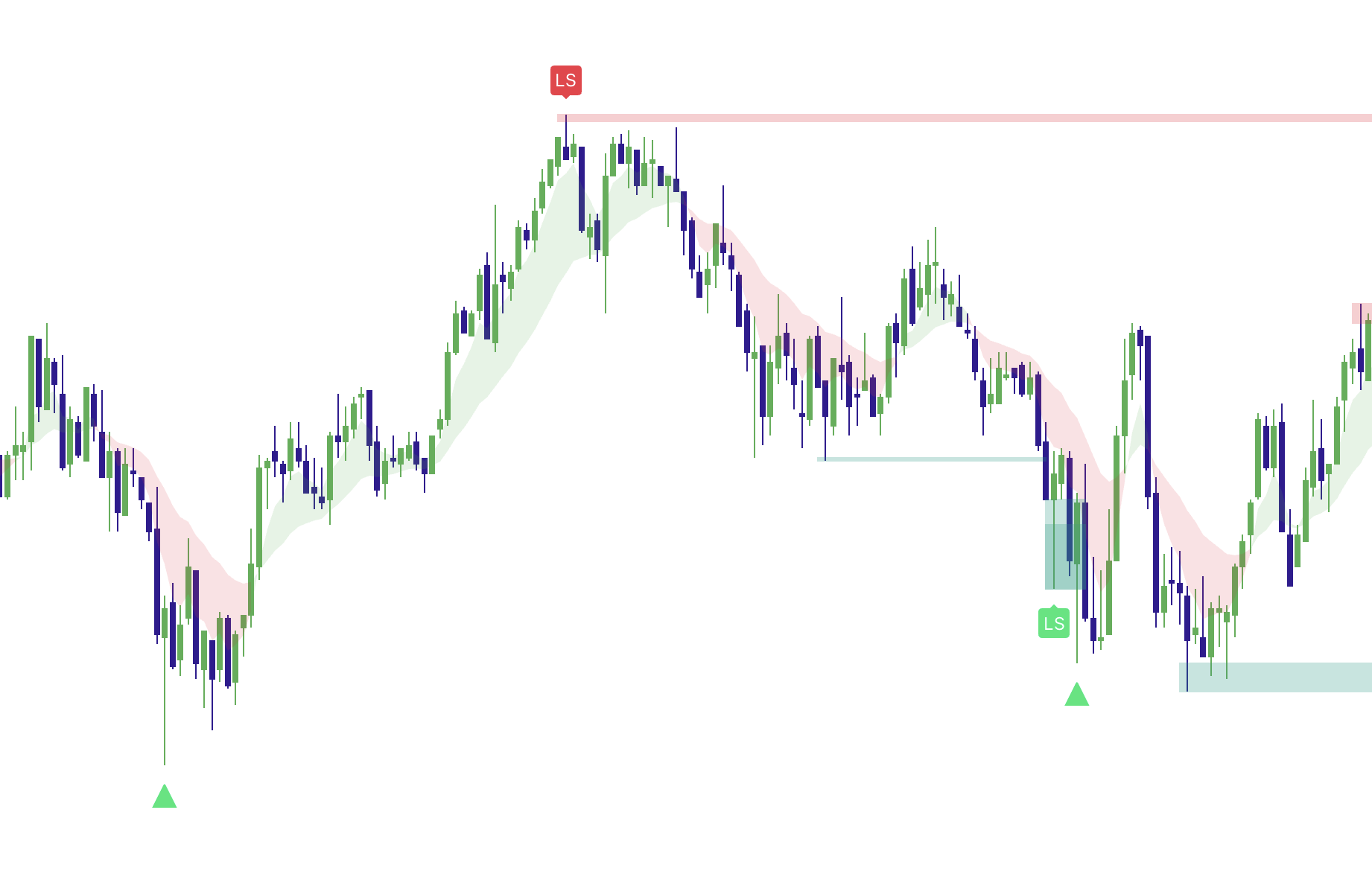
Step 1: Define Your Sweep Levels (The "Magnets")
Turn on Sweep Levels+ or Market Map and keep only the liquidity references that can realistically affect the session. Start with PDH/PDL, Overnight / Session H/L, and nearby higher-timeframe structure.
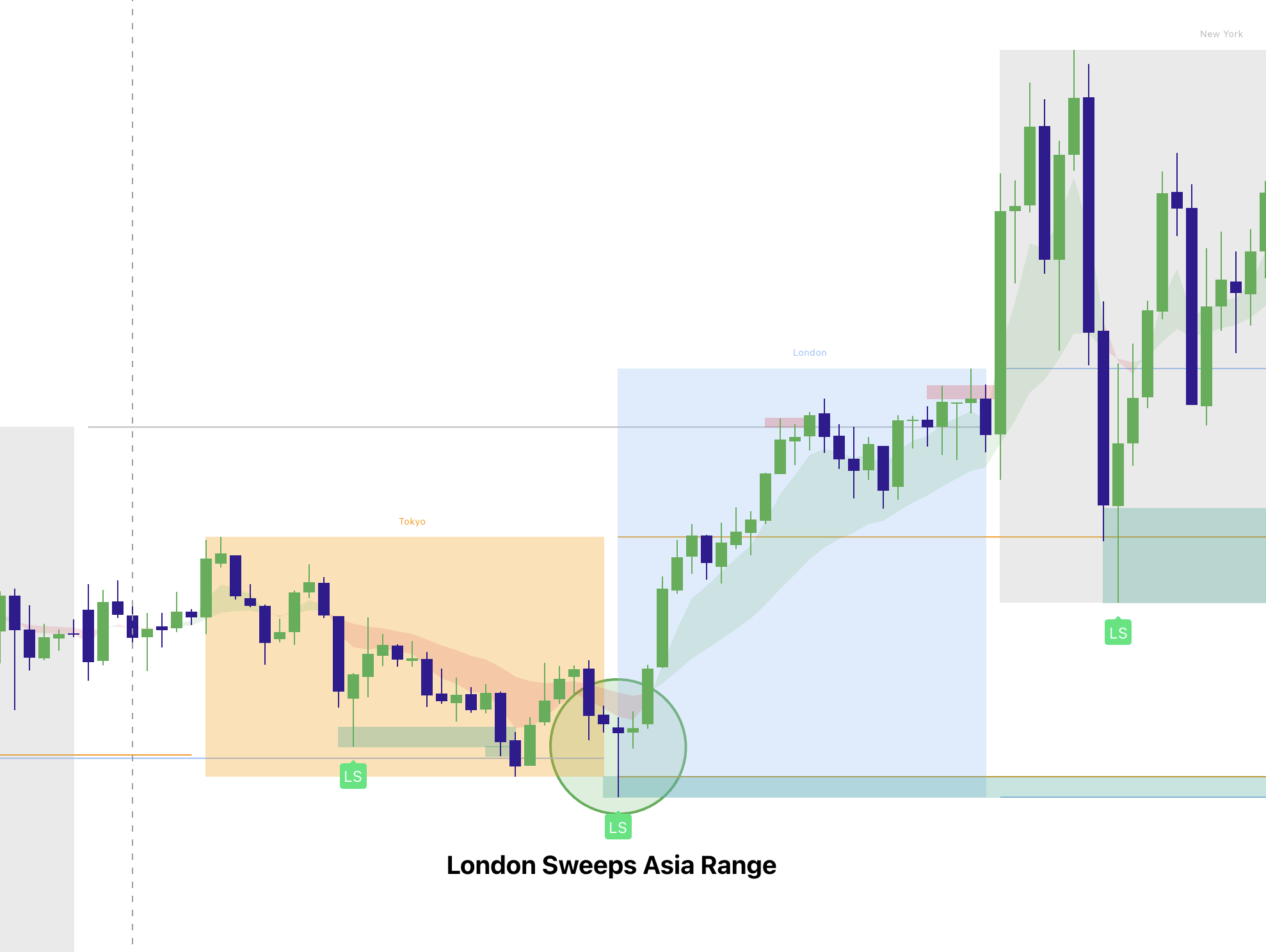
- Prioritize: Prior Day High/Low (PDH/PDL) and other nearby external-liquidity levels.
- Monitor: Overnight, Asia, London, and NY session highs/lows relevant to your trading window.
- Minimize: Do not give every plotted line equal weight. Fewer, structurally important references are better.
- Market Map: Confirms the sweep is occurring at meaningful external liquidity rather than a random pivot.
- Market Extremes / VWAP Deviation: Shows whether price is genuinely extended enough to strengthen the reversal context.
- Momentum Gaps / Reversal Blocks / Real FVG: Shows whether opposite displacement creates defendable structure for retests, invalidation, and targets.
Step 2: Wait for Price to Run the Level (Observe the Liquidity Event)
Do not assume the reversal while price is still expanding through the level. A meaningful sweep can arrive with speed, displacement, and one-directional pressure, but the move can still become genuine breakout acceptance.
- No Trade Yet: The setup is unresolved; first determine whether price rejects or accepts beyond the level.
- Observe the Response: Watch for failed continuation, reclaim, or a sharp opposite response after the level is traded through.
Step 3: Confirm the Rejection (Wait for Structure)
A sweep is incomplete until price shows that the breakout is actually failing.
- Confirmation Check: Did price reclaim the level and begin displacing away? If it closes and builds structure outside, treat that as acceptance risk.
- Signal Validation: Did a Triangle signal or LS label print at the liquidity event rather than after price already moved away?
Entry Trigger: Take the trade only after your predefined confirmation appears—either immediate reversal confirmation or a structured retest.
Step 4: Execute the Trade (Entry, Stop, & Targets)
Sweep reversals can offer a precise and logical risk model when execution is tied to structure.
- Entry: Use the candle after confirmation for the aggressive model, or wait for a controlled retest of the reclaimed level / RB / FVG.
- Stop Loss: Place risk beyond the structure that invalidates the failed-breakout thesis. The sweep wick is often relevant, but not automatically the only valid stop.
- Target 1 (Rotation): Take partial profits at internal liquidity, VWAP, or another realistic value reference.
- Target 2 (Extension): Hold a runner only while price continues defending the reversal toward the next major liquidity objective.
Step 5: When to Stand Aside (Skip the Noise)
Skip the trade when the liquidity event lacks enough structural evidence to support a reversal:
- No Meaningful Level: The signal occurs in mid-range with no important external liquidity nearby.
- No Failed Continuation: Price keeps closing beyond the level or successfully retests it as new support/resistance.
- No Opposite Response: Participation remains strong in the breakout direction and no meaningful reclaim or displacement develops.
Optional Advanced Confirmation
Elev8+ can stand on price structure alone, but experienced traders may also layer:
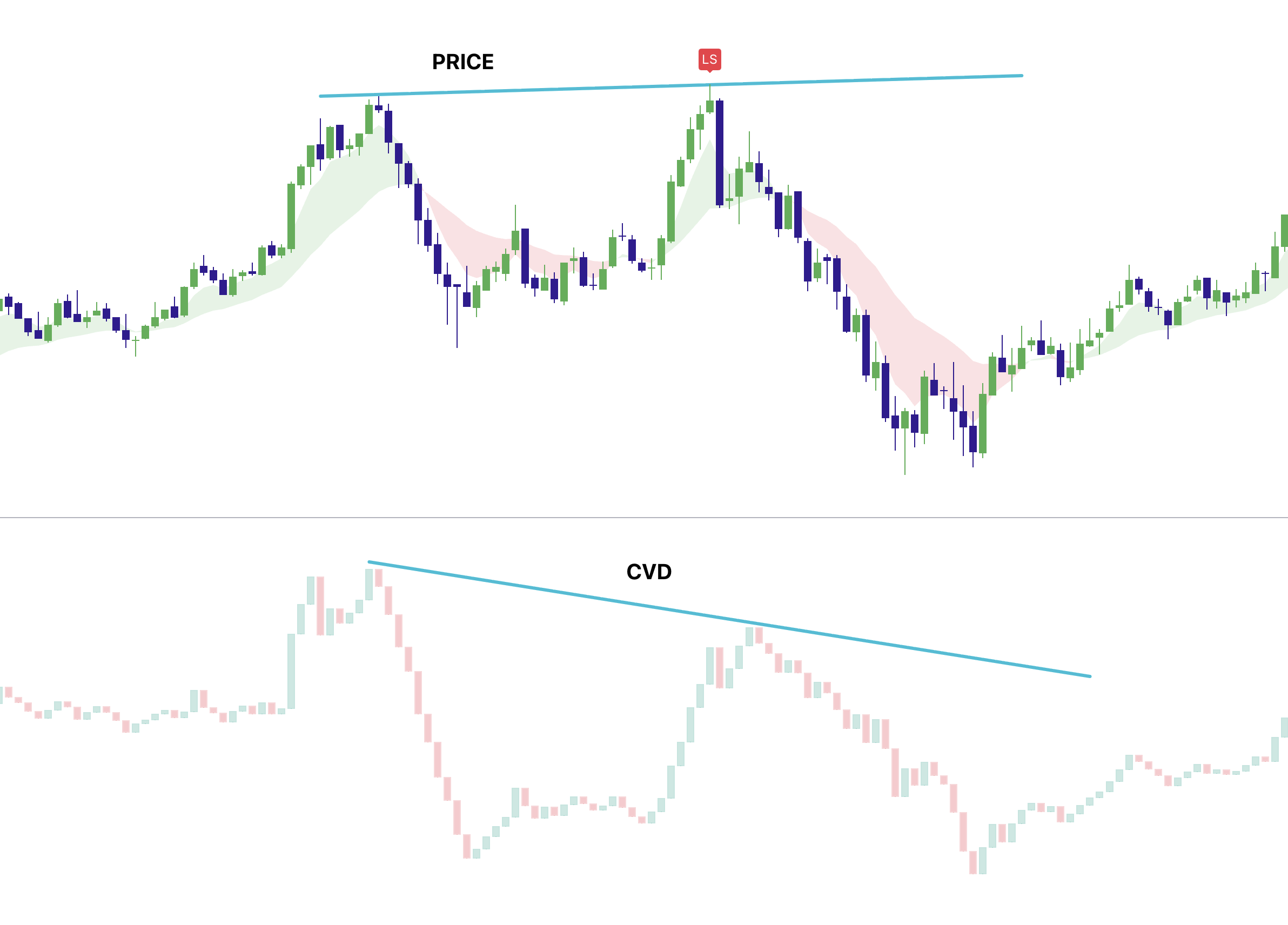
- Order Flow: Look for CVD divergence or Bookmap absorption when they support failed aggression at meaningful liquidity rather than treating them as standalone reversal signals.
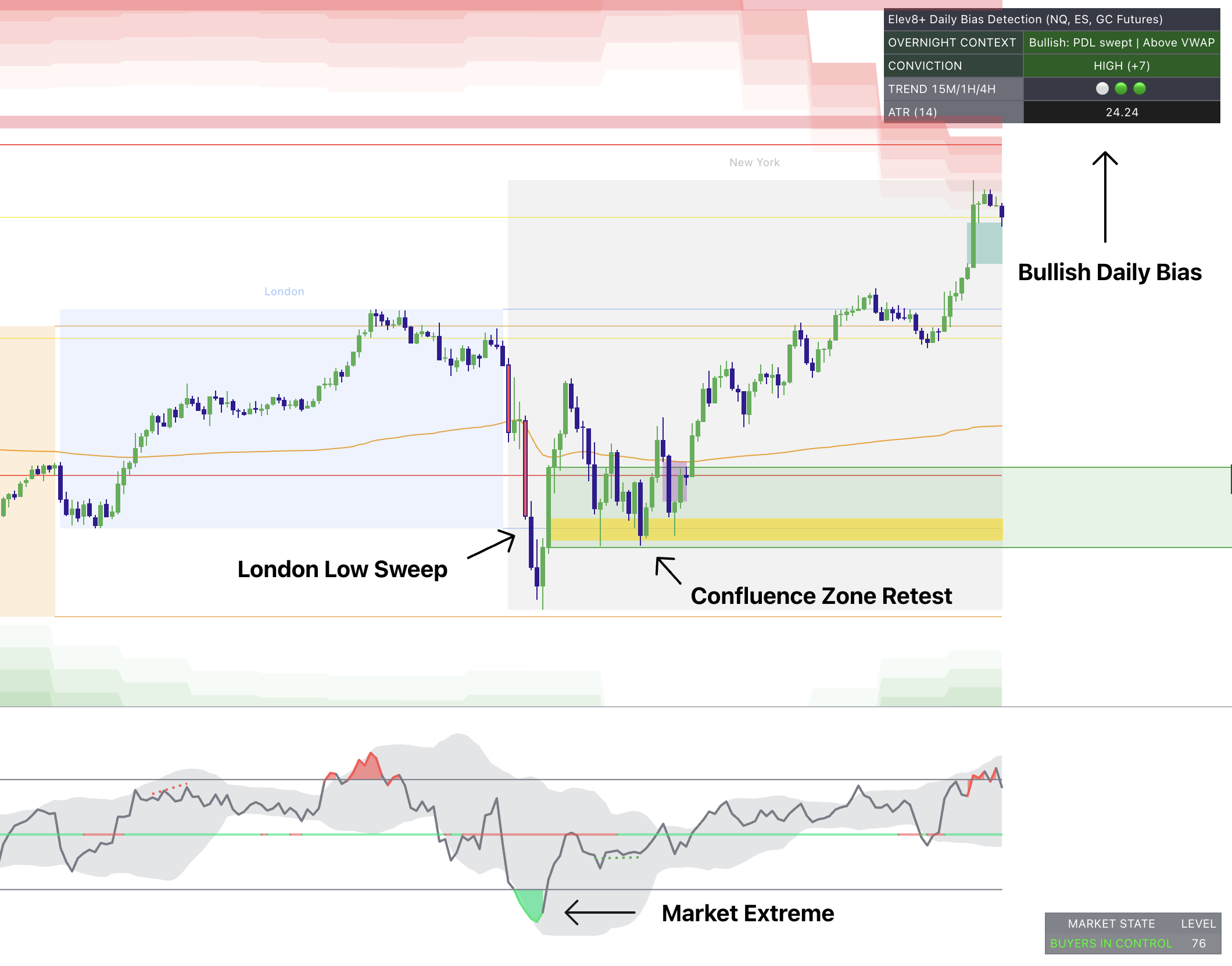
- Session Timing: Use London, NY Open, and other active windows as context, but require the same location, rejection/acceptance, and structure rules.
Summary: The Sweep Playbook Checklist ✅
Quick checklist
- Identify meaningful external liquidity (PDH/PDL, ONH/ONL, Session H/L, or HTF structure).
- Allow price to trade through the level without assuming reversal.
- Confirm failed continuation with reclaim / displacement plus Triangle, LS, or structured retest confirmation.
- Set Stop beyond structural invalidation.
- Target internal liquidity or VWAP/value first, then extend only if the reversal keeps defending structure.
This playbook helps Elev8+ users shift away from emotional breakout fading and toward structured, higher-confluence reversals with meaningful location, observable failure, defined invalidation, and realistic targets.
Quick Checklist
- I can identify a reversal-quality sweep at meaningful liquidity.
- I can wait for observable rejection and displacement before entry.
- I can place invalidation beyond the failed thesis and select realistic targets.
What Invalidates the Setup?
Stand aside when meaningful location, the expected price response, confirmation, clearly defined structural risk, or a realistic target is missing. A tool or signal by itself does not complete the trade thesis.
Common Mistakes
- Treating a liquidity touch or signal as an automatic entry.
- Skipping the rejection-versus-acceptance decision.