
What You'll Learn
- Recognize the most common location, timing, and confirmation mistakes.
- Reduce overtrading and avoid entering during the liquidity run.
- Build selective, repeatable execution and risk habits.
Elev8 sweep reversals can become very structured when they are executed with context. New users often make the same mistake: they take every triangle or LS label they see and quickly learn that location, rejection/acceptance, structure, and invalidation matter just as much as confirmation. This guide highlights the most common beginner mistakes and the best practices that help turn Elev8 into a selective, repeatable trading framework.
Beginner mindset shift
Elev8 is not designed to make you trade more often. It is designed to help you identify higher-quality liquidity and structure events so you can wait for clearer setups, define risk, and avoid forcing trades.
- Gate 1 — Location: The setup should occur at meaningful liquidity or structure (PDH/PDL, ONH/ONL, session extremes, weekly/monthly, or a significant HTF swing).
- Gate 2 — Behavior: Price must show reclaim / failed continuation / opposite displacement rather than clean acceptance beyond the level.
- Gate 3 — Confirmation: Triangle, LS, or a structured RB/FVG retest confirms the thesis at the correct location.
Optional confluence: Market Map confirms external liquidity and session structure, Market Extremes / VWAP Deviation show whether price is genuinely extended, and Momentum Gaps / Reversal Blocks / Real FVG help separate valid displacement and retest structure from ordinary chop or continuation.
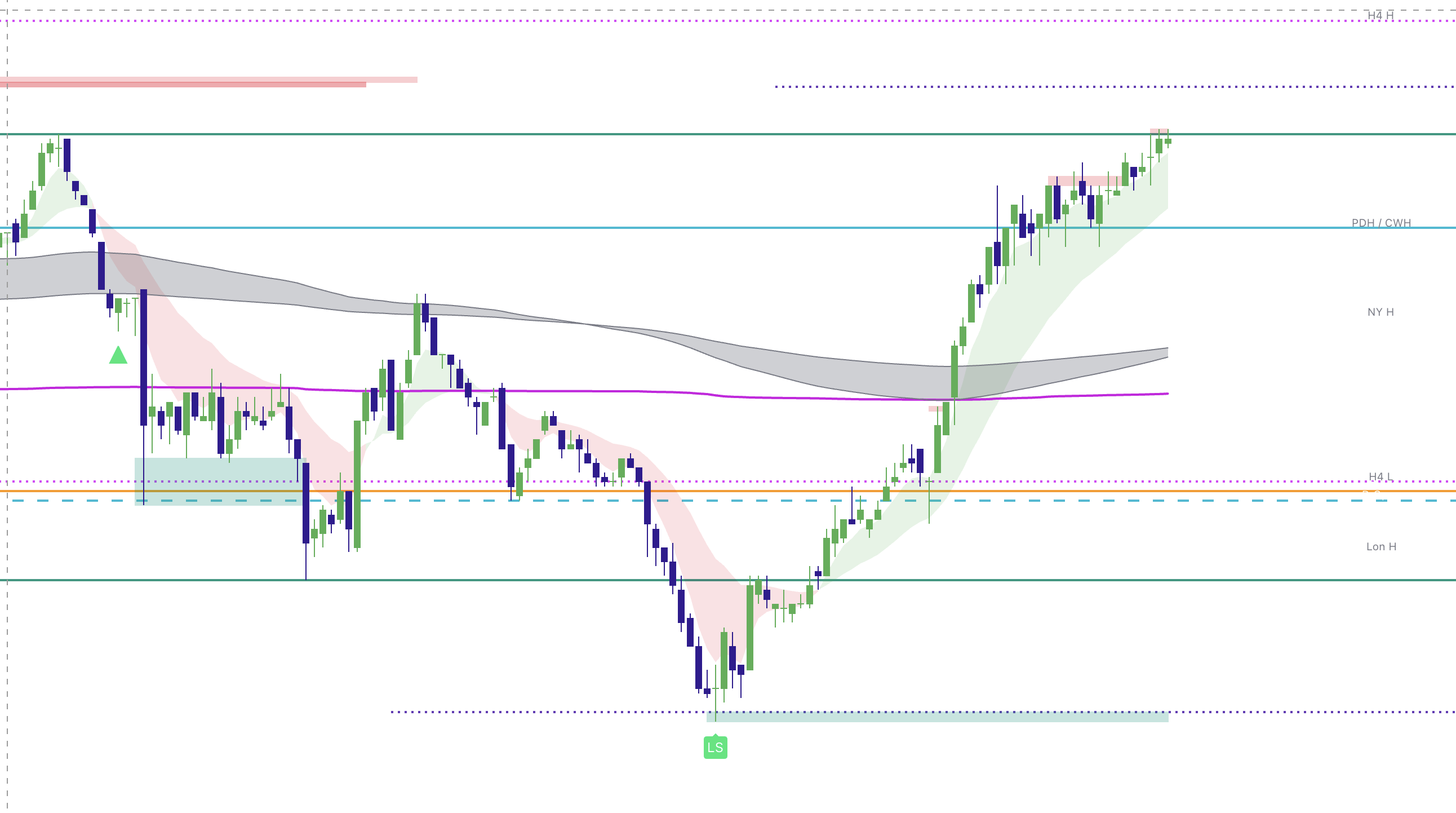
Mistake 1: Taking Sweeps Without a Major Level
Elev8 identifies sweep and reversal behavior automatically, but not every signal carries the same structural weight. A setup becomes more meaningful when it occurs at liquidity or structure that other market participants are also likely watching.
- Tier 1: Prior Day High / Low, Weekly / Monthly extremes, major HTF swings
- Tier 2: Overnight, Asia / London / New York session highs and lows
- Tier 3: Local pivots / micro intraday structure (lower priority unless your strategy is specifically built around them)
If there is no meaningful liquidity or structural reason for the setup, deprioritize or skip it. Random signals inside chop often provide poor invalidation, limited targets, and messy follow-through.
Mistake 2: Entering During the Run (FOMO)
One of the fastest ways to destroy a good setup is entering while price is still attacking the level. At that moment, the liquidity event is unfinished and you still do not know whether price will reject or establish acceptance.
- You are entering before the liquidity event has resolved
- The apparent rejection can disappear before the candle closes
- Price can still extend, displace, and successfully hold beyond the level
Best practice: let price prove the reaction first. Wait for reclaim, failed continuation, displacement, a structure shift, or another predefined confirmation after the liquidity event.
Mistake 3: Overvaluing Wick Structure
The wick is useful information, but it is not the entire reversal. A wick can show rejection pressure, while the bars that follow tell you whether that rejection actually changed control.
Weak sweep candles often show:
- Little excursion beyond the level and no meaningful reclaim
- Large bodies that continue closing near or beyond the extreme (acceptance risk)
- Messy two-sided structure inside tight ranges with no displacement away
Simple rule
A wick is evidence, not proof. Prioritize meaningful liquidity followed by reclaim, failed continuation, displacement, or a clear structure shift.
Mistake 4: Using Loose or Random Stop Placement
Sweep reversals can provide a clean risk model when you identify the structure that must remain intact for the reversal thesis to stay valid.
- Place your stop beyond the structure that invalidates the setup—not at an arbitrary fixed distance.
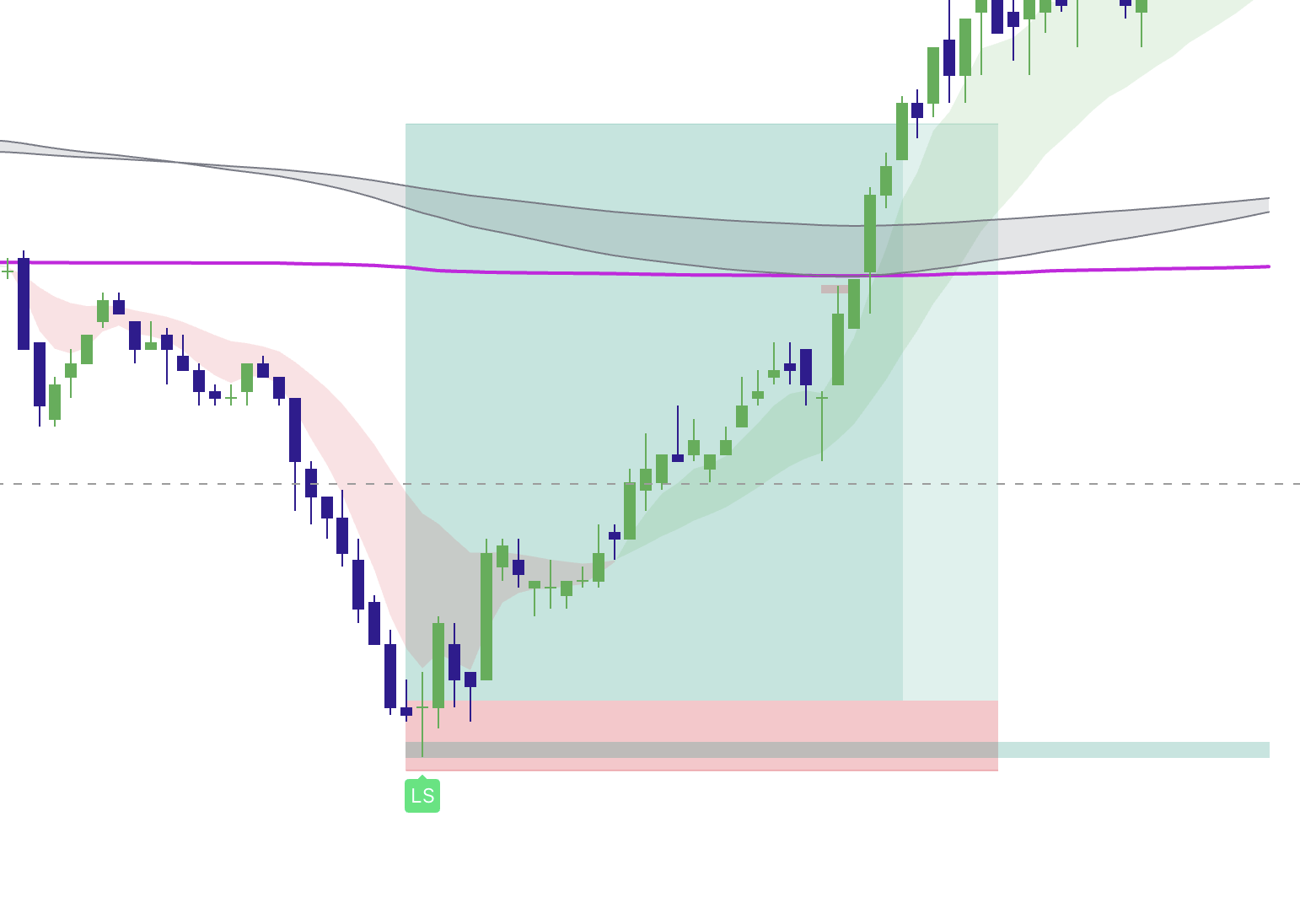
This creates a stop placement that is:
- Defined
- Structural
- Aligned with your thesis
Beginners reduce execution quality when they widen stops after entry or choose arbitrary distances that are disconnected from the actual invalidation point.
Mistake 5: Taking Every Triangle You See
Triangles are higher-frequency by design. They are the system’s way of highlighting potential reversal conditions. The mistake is treating every triangle as a complete trade.
- Triangle: Attention trigger (you still must verify location, rejection/acceptance, and structure).
- LS label: More selective confirmation using stricter internal qualification—but it still needs a valid setup around it.
Triangles become higher quality when:
- Meaningful external liquidity or HTF structure is present
- Price fails to continue beyond the level and begins reclaiming / displacing away
- Session participation, extension, and surrounding structure support the thesis
Think of triangles as the system saying: "Investigate this reaction." Your job is to decide whether the surrounding evidence creates a valid trade.
Mistake 6: Over-Trading (The "Casino" Approach)
Elev8 is designed to help you filter for selective reversal and continuation setups. If you are taking 5, 10, or 15 trades simply because signals are printing, you are probably reacting to noise instead of executing a defined model.
Over-trading increases fees, but the bigger problem is decision fatigue. The more setups you force, the easier it becomes to lower your standards for location, confirmation, and risk.
The 2-Loss Rule
A two-loss session stop can be a useful discipline rule if it fits your risk plan. Consecutive losses may mean conditions do not match your reversal model—or simply that normal variance is occurring. Use the rule to protect behavior and daily risk, not as proof that the market must be trending.
Mistake 7: Treating LS as Automatic Permission
New traders sometimes assume an LS label is a guaranteed higher-quality trade simply because it is more selective. LS should be treated as stronger confirmation—not as a replacement for location, structure, or invalidation.
- Stricter internal qualification
- Lower signal frequency than standard triangles
- Useful as a confirmation layer while learning the broader setup
If you are still building confidence, use LS to practice patience—but continue verifying the liquidity level, acceptance/rejection behavior, and structural risk before entering.
Mistake 8: Trading During Low-Participation Hours
Elev8 can work across sessions, but lower-participation periods often produce less displacement and more two-sided rotation. Weak conditions often include:
- Slow periods with little catalyst or directional expansion
- Midday consolidation with compressed ranges
- Repeated sweeps inside tight micro structure with no follow-through
Higher-quality setups often appear around session transitions and active liquidity events, but the quality comes from location and price response—not from the clock alone.
Timing is part of the context
If your setup has good location but participation and displacement remain weak, your best decision may be to wait until price gives you cleaner confirmation.
Mistake 9: Overcomplicating the Chart
The expanded Elev8+ suite is powerful, but beginners can easily turn on too many levels, zones, and confirmation tools at once. This creates visual overload and makes it harder to understand which evidence actually changed the decision.
Best practice:
- Keep the major liquidity levels and the one or two context tools relevant to your current playbook
- Hide tools that are not answering a specific question
- Focus on independent evidence over indicator quantity
Less noise improves clarity, consistency, and your ability to review why a trade was actually taken.
Best Practices for New Elev8 Users
Use this as your baseline rule set while you build experience:
- Quality over Quantity: Focus on a small number of clearly defined setups rather than forcing a daily trade quota.
- Prioritize meaningful external liquidity and HTF/session structure.
- Wait for failed continuation, reclaim, displacement, or another predefined confirmation.
- Place stops beyond structural invalidation and define risk before entry.
- Frame first targets around internal liquidity, VWAP/value, or another realistic mapped objective.
- Daily Risk Rule: Use a predefined maximum-loss / stop-trading rule that fits your account and tested process.
- Journal: Screenshot every setup and record location, confirmation, invalidation, target, and whether price rejected or accepted.
Consistency improves when you treat Elev8 as a framework for filtering location and structure, not as a signal generator that must always produce a trade.
Summary
Key takeaways
- A signal without meaningful liquidity or structure is lower priority
- A sweep without failed continuation / reclaim is incomplete
- Bar close helps, but displacement and structure determine whether rejection actually held
- Structural invalidation matters more than forcing every stop just beyond a wick
- Over-trading is the enemy of consistency
- LS is more selective, but it still requires the same location and risk discipline
Elev8 is a liquidity, structure, and confirmation framework, but beginners benefit most by removing randomness and focusing on a small number of clearly defined environments. Once those habits form, reversal and continuation setups become easier to classify, review, and execute consistently.
Quick Checklist
- I can recognize the most common location, timing, and confirmation mistakes.
- I can reduce overtrading and avoid entering during the liquidity run.
- I can build selective, repeatable execution and risk habits.
What Invalidates the Setup?
Stand aside when meaningful location, the expected price response, confirmation, clearly defined structural risk, or a realistic target is missing. A tool or signal by itself does not complete the trade thesis.
Common Mistakes
- Choosing size before defining structural invalidation.
- Improvising entries, exits, or rules after the trade begins.
Next Recommended Lesson
Sweep Invalidation Rules: When an Elev8+ Sweep Is NOT a Trade →