
What You'll Learn
- Explain the difference between Triangle and LS confirmations.
- Balance signal frequency with selectivity and location quality.
- Use both signal types as confirmation rather than automatic entries.
LS vs Triangle: Understanding Elev8+ Sweep Signal Quality
The Elev8+ indicator prints two primary reversal confirmations: triangle signals and LS labels. Both can identify valid reversal environments, but they differ in frequency, internal selectivity, and how much additional context you should require before treating them as trades.
The "Metal Detector" Analogy
Think of Triangles like a broader scanner. They alert more often and help you notice potential reversal behavior, but many still need additional filtering.
Think of LS Labels like a narrower scanner. They appear less often because the internal qualification is stricter, but they still need meaningful location, rejection/acceptance, and defined risk before becoming trades.
The "Day 1" Protocol for New Users
If you just installed Elev8+, you might be tempted to take every signal. Don't. Follow this protocol for your first week so you learn the setup before you increase complexity:
- Use Triangles as observation alerts. Study where they appear without treating every one as an entry.
- Prioritize LS Labels only when they appear at meaningful liquidity or structure (PDH/PDL, ONH/ONL, session extremes, HTF levels).
- Why? This keeps the learning process selective while still teaching you how both signal types behave.
Triangle Signals (Broader Reversal Detection)
Triangle signals appear when Elev8+ identifies a broader set of reversal conditions. At a high level, the environment may include:
- Interaction with meaningful liquidity or nearby structure
- Rejection or failed continuation back toward prior structure
- Core volatility and reversal criteria built into Elev8+
Triangles are designed to identify more reversal candidates without demanding the stricter internal qualification used for LS.
Where triangles are strongest
- Scalping around clear session, prior-day, or HTF structure
- Reversals where external liquidity, extension, and failed continuation are obvious
- Fast setups where you can independently verify reclaim, displacement, and structural invalidation
Key limitations to respect
- Triangles can still appear during choppy, mixed, or mid-range conditions
- They benefit from independent context such as Market Map, Market Extremes / VWAP Deviation, or RB/FVG structure
- They require more trader discretion when acceptance and continuation remain strong
LS Labels (More Selective Sweep Confirmations)
LS labels use a deeper and more selective validation layer. While the exact internal logic is proprietary, the intent is consistent: LS is designed to highlight more selective reversal conditions within stronger structural and volatility environments.
At a high level, LS is more likely to be useful when the setup is also supported by:
- Meaningful liquidity plus clear failed continuation / reclaim
- Stronger displacement or structural response around the reversal area
- Independent context such as extension, session structure, or a defendable RB/FVG retest
Where LS shines
- Major liquidity such as prior-day, overnight, session, or higher-timeframe extremes
- Active session windows where the liquidity event produces clear rejection or acceptance
- Setups where you want a more selective confirmation layer before committing predefined risk
Trade-off to understand
- LS is less frequent by design and may not appear during every valid reversal.
- Some profitable triangle setups will never receive an LS label.
- The objective is not more signals, but more selective signals.
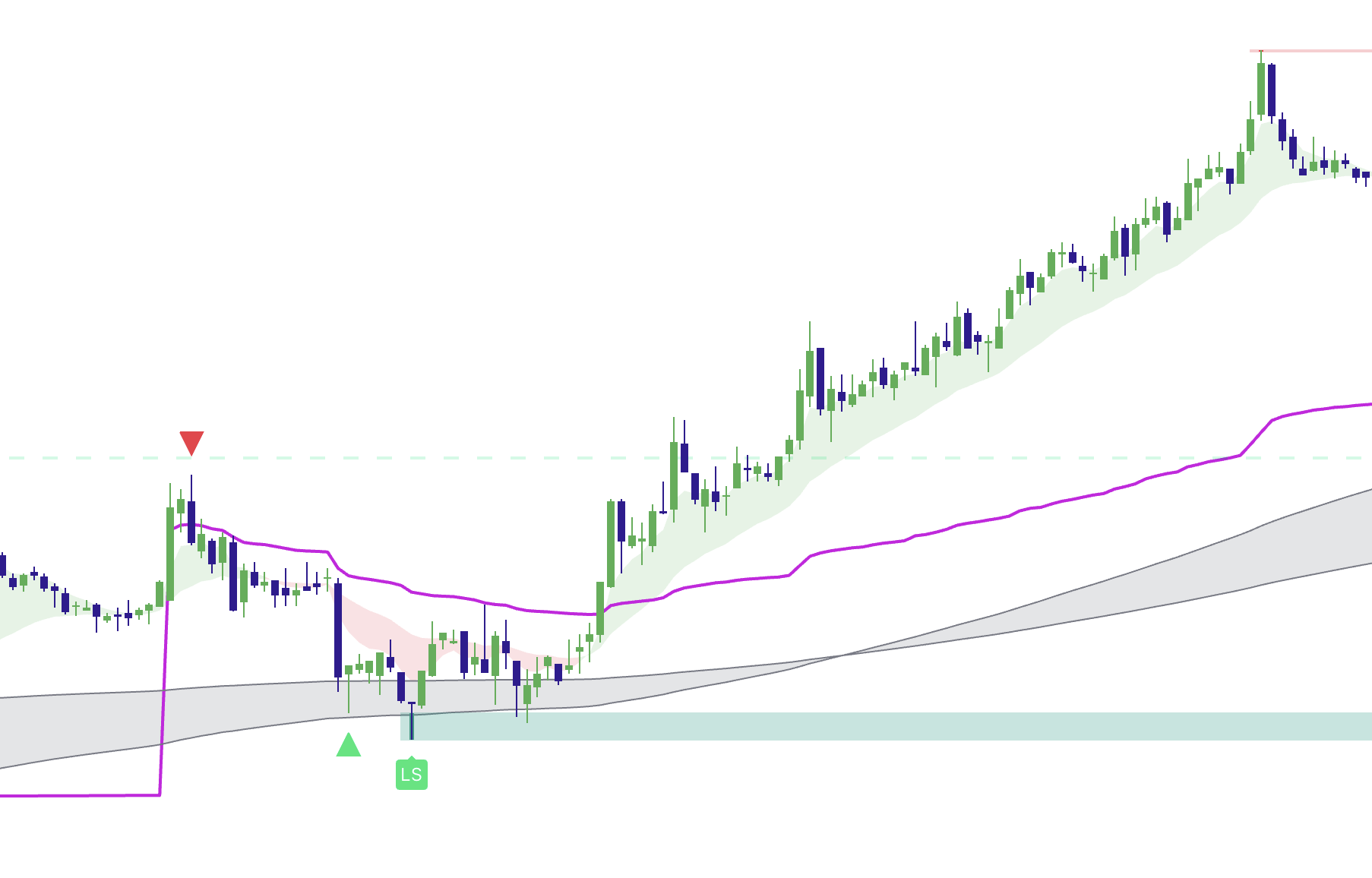
Selectivity vs Frequency: Choosing the Right Tool
The practical difference is straightforward:
- Triangles offer more opportunity and therefore require more context filtering.
- LS offers more selectivity, but selectivity alone does not justify larger risk.
You do not need to “pick one forever.” Use triangles to stay aware of potential reversal behavior and LS to highlight a narrower subset of setups that still need the same location, structure, invalidation, and target discipline.
Reality Check: Can LS Signals Fail?
Yes. No indicator is 100%. An LS Signal is a more selective setup, not a guarantee or a verified probability edge by itself.
When LS Fails
If an LS Signal prints while price is accepting strongly beyond a level, continuing to displace, or trading inside a major event-driven move, it can still fail. Always define structural invalidation before entry. If price proves the failed-breakout thesis wrong, exit according to your risk plan regardless of the label.
When LS Should Be Your Primary Signal
LS confirmations are especially useful when:
- Price is interacting with clearly defined external liquidity or a meaningful HTF level
- The breakout fails, price reclaims, and opposite displacement begins
- You want a more selective confirmation layer before using your normal planned risk
- Session participation, extension, and surrounding structure support the reversal thesis
Risk and Stop-Loss Behavior
Both signal types follow the same foundational risk model: your invalidation is structural, not the label itself.
- Stops belong beyond the structure that would prove the reversal thesis wrong; the sweep wick is often one reference.
- LS may increase setup selectivity, but it should not automatically increase position size.
- Triangle and LS trades should both remain inside the same predefined maximum-risk framework.
This structure is one of the reasons sweep trading can offer attractive asymmetry when the location, invalidation, and realistic target are all defined before entry.
Summary
Quick recap
- New Users: Use Triangles for observation and prioritize LS only at meaningful locations while learning.
- Triangles = More frequent alerts; require stronger context filtering.
- LS Labels = More selective confirmations; not automatic permission to size larger.
- Risk Management: A signal is an opportunity to evaluate a setup, not a promise of profit.
Mastering Elev8+ means understanding how to combine broader detection with greater selectivity. Use triangles to identify potential reversal areas, and use LS to narrow attention toward the setups where location, structure, and confirmation align.
Quick Checklist
- I can explain the difference between Triangle and LS confirmations.
- I can balance signal frequency with selectivity and location quality.
- I can use both signal types as confirmation rather than automatic entries.
What Invalidates the Setup?
Stand aside when meaningful location, the expected price response, confirmation, clearly defined structural risk, or a realistic target is missing. A tool or signal by itself does not complete the trade thesis.
Common Mistakes
- Using every available tool on every setup.
- Treating a plotted level, zone, alert, or label as an entry by itself.
Next Recommended Lesson
Elev8+ Market Map: Sessions, ORB Breakouts, Daily NY Bias Dashboard & Daily Fib Levels →