
What You'll Learn
- Match Elev8 confirmation timeframes with appropriate option duration.
- Evaluate strike, DTE, liquidity, and premium risk before entry.
- Avoid treating an indicator signal as automatic permission to buy an option.
Options Playbook • Higher Timeframes
How to Use Elev8+ Triangle Signals for Stock Options (1H, 4H, and 1D)
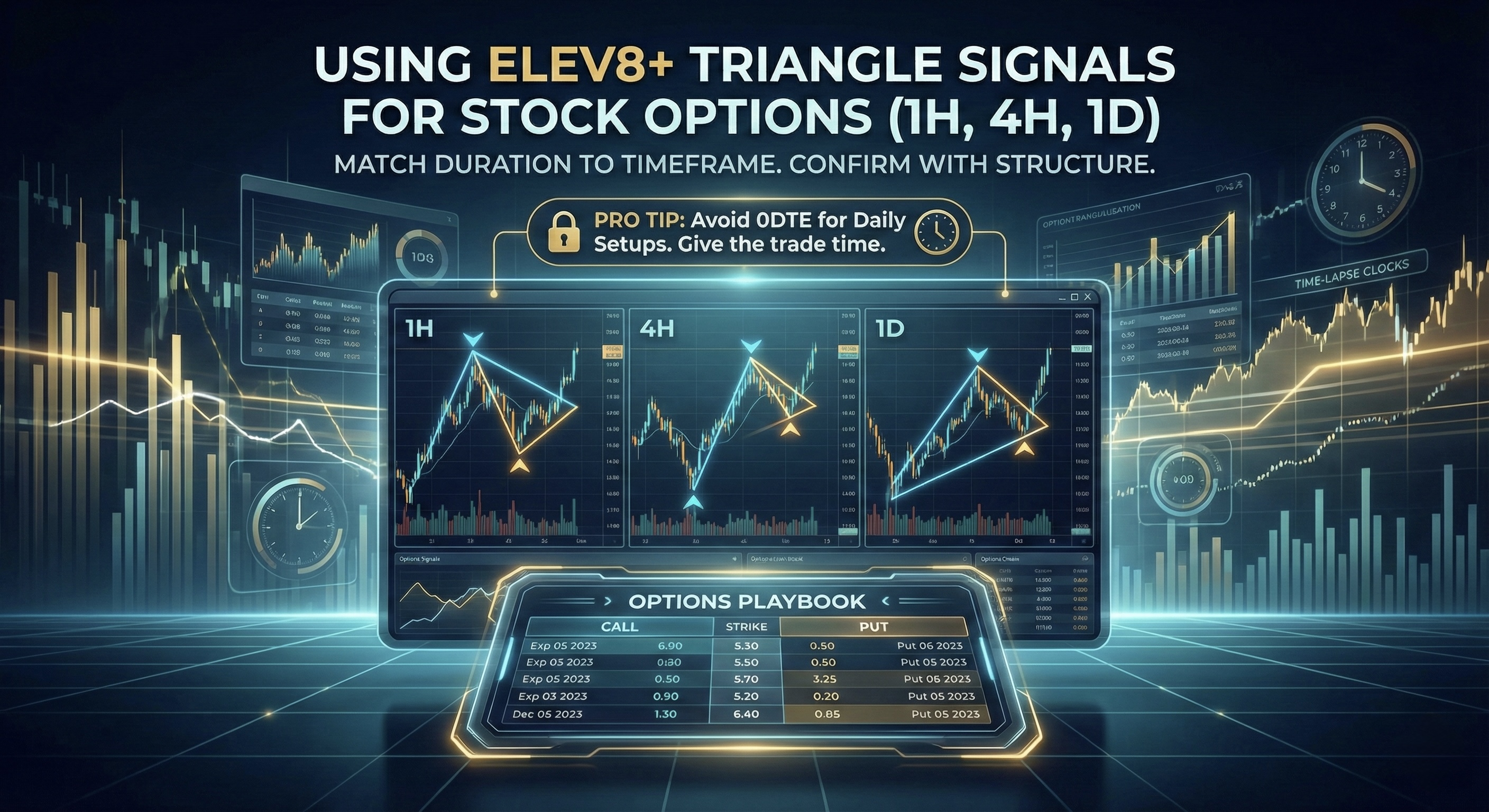
Higher timeframe triangles can identify developing shifts in trend or momentum—but a valid 4H or daily thesis may take several sessions, or longer, to fully develop. This guide shows how to apply Elev8+ triangles to options by combining higher-timeframe location and structure with contract duration (DTE), lower-timeframe confirmation, and clear invalidation—so the option contract has enough time for the underlying thesis to work.
Educational content only. Options involve substantial risk, including time decay, volatility changes, and total loss of premium. Not financial advice.
Core idea
Treat higher-timeframe triangles as alerts to investigate, not automatic option entries. First confirm location, structure, and invalidation on the underlying.
Contract match
Higher timeframes generally need more time. Choose enough DTE that normal pullbacks or consolidation do not make expiration the main reason the trade fails.
0DTE rule
Daily and 4H signals may need multiple sessions to resolve. Don’t force them into 0DTE. Keep 0DTE tied to true intraday setups with intraday confirmation and invalidation.
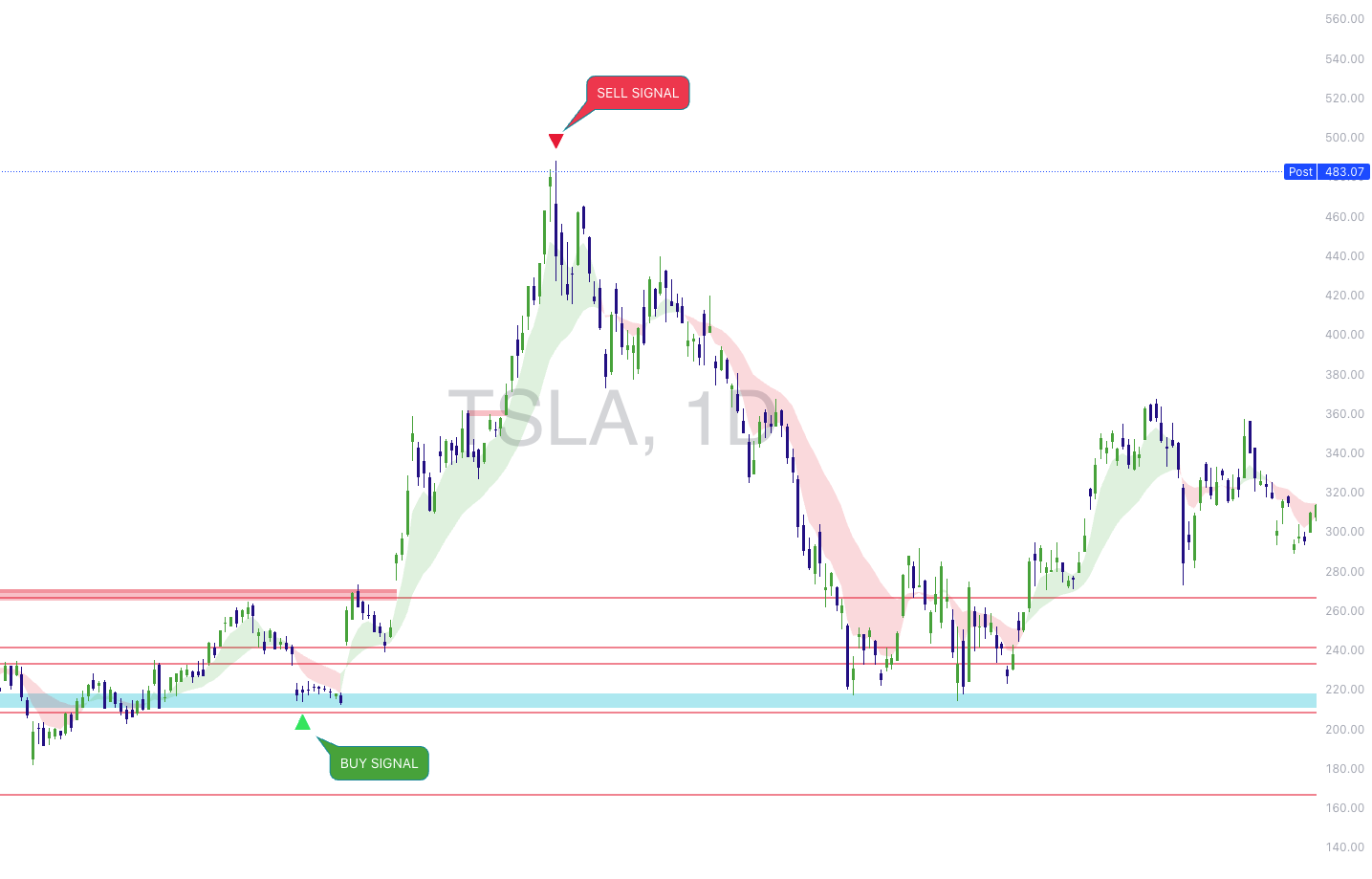
Example 1: 1D triangle at a major level (swing thesis)
The Big Idea: Match Your Contract Duration to Your Timeframe
A triangle on the 1D chart is not the same trade as a triangle on the 1m chart. A daily or 4H signal can describe a move that develops over several candles, which may mean several trading sessions. If the option expires too soon, you can be correct about direction and still lose because the contract did not have enough time.
Practical translation
Match the life of the contract to the expected life of the setup. Higher timeframe does not automatically mean a better trade—it usually means the underlying thesis needs more room in both price and time.
ATM vs Slightly OTM (and Why It Matters)
Contract selection changes how closely the option responds to the stock. ATM and moderately directional contracts generally respond more directly to movement in the underlying than far-OTM contracts, while deep OTM contracts usually need a larger and faster move before they gain meaningful intrinsic sensitivity.
The goal is not to find the cheapest contract. The goal is to choose a contract that fits the expected move, timeframe, liquidity, and amount of premium you are prepared to risk. A good chart thesis can still become a poor options trade if the strike or expiration requires an unrealistically fast move.
Why 0DTE Usually Doesn’t Match 1D / 4H Signals
A higher-timeframe signal can remain valid while the stock consolidates, retests the signal area, or spends several sessions building structure. A 0DTE contract has no ability to wait through that process. Its remaining time disappears during the same session, so the option can deteriorate rapidly even while the daily or 4H thesis remains technically intact.
If the setup is based on the 1D or 4H chart, the option should not require the entire move to occur immediately. If you want to trade 0DTE, build the thesis from an intraday setup where both the expected move and invalidation belong to that same trading session.
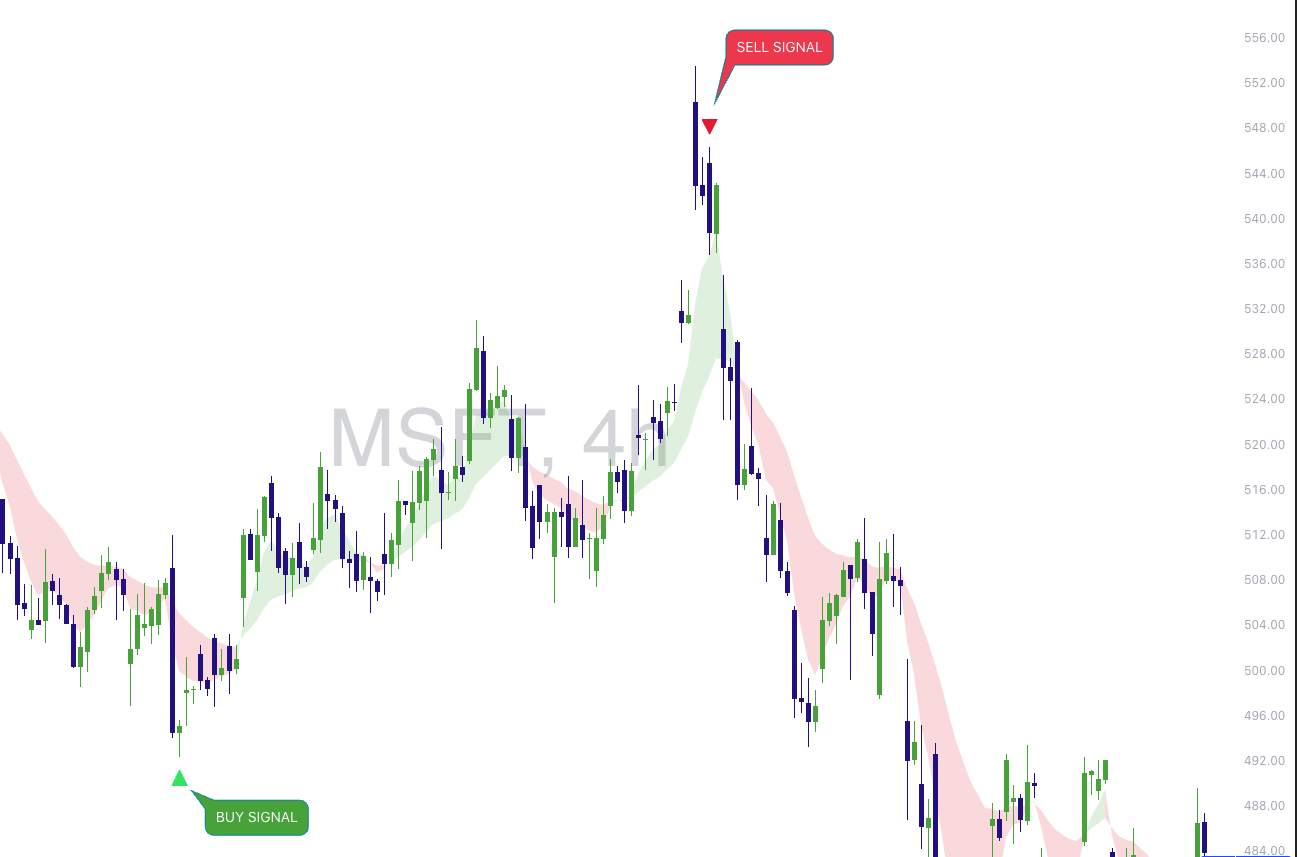
Example 2: 4H confirmation (reclaim / structure shift)
Confirmation Workflow: 1D Bias → 4H Structure → 1H Timing
1) 1D = Primary Bias (Location Matters Most)
- Prioritize triangles at meaningful areas: major support/resistance, range extremes, prior daily/weekly liquidity, or important swing highs/lows.
- Be cautious with triangles that print in the middle of a broad range with no clear structural reason for price to turn.
- Ask whether price is rejecting the level or still showing clean acceptance in the existing trend direction.
2) 4H = Structure (Is the Reversal Actually Developing?)
- Look for a reclaim, failed continuation attempt, displacement away from the extreme, or a meaningful structure shift.
- A fresh RB/FVG created by the reversal can provide a more precise retest area than entering simply because the daily triangle appeared.
- Confirm that the setup is not running directly into nearby higher-timeframe support/resistance that destroys the available reward.
3) 1H = Timing (Improve Entry, Define Risk)
- Prefer a controlled pullback or retest after the higher-timeframe reaction instead of chasing the first large candle.
- Use the 1H chart to define the price structure that must hold for the thesis to remain valid.
- Remember that the option is the vehicle; the underlying chart should determine whether the trade thesis is working or failing.
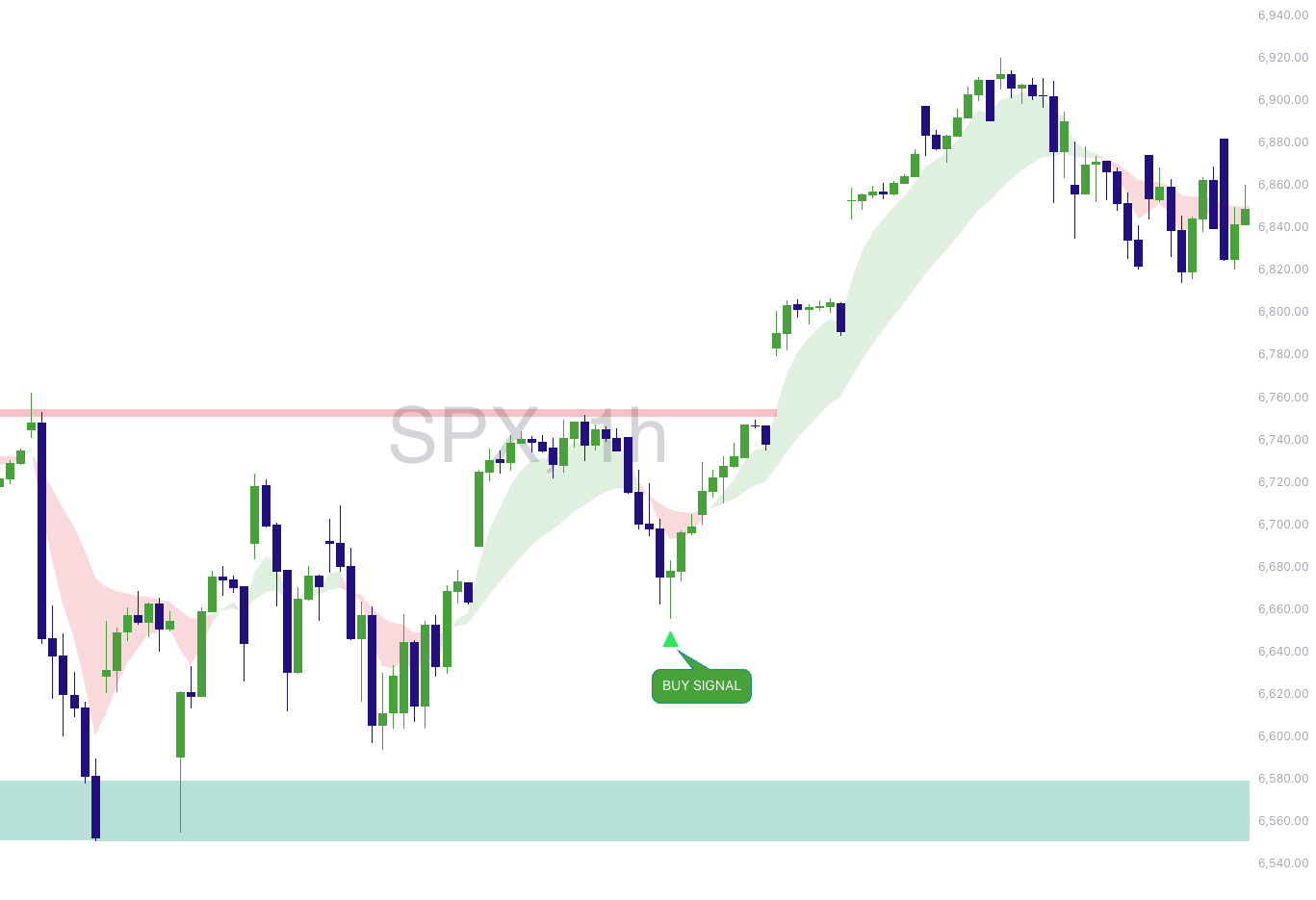
Example 3: 1H entry timing (pullback + invalidation)
Position sizing
Size the position so the planned loss is acceptable before entering. Options are defined-risk instruments, but defined risk does not mean low risk.
Time risk
If the thesis is 1D/4H, avoid contracts that require an immediate move to survive. Give the setup enough time for normal pullbacks and consolidation without letting expiration become the main reason the trade fails.
Invalidation
Define the underlying price level or structure that proves the thesis wrong before entering. Manage the idea from the chart—not from every short-term fluctuation in option premium.
When 0DTE Can Make Sense (Lower Timeframes Only)
0DTE is fundamentally an intraday instrument. If you use it, the trade should come from intraday location, intraday confirmation, and an intraday expected move. A lower-timeframe liquidity sweep, reclaim, displacement, or structured retest can create that type of setup because the thesis is expected to resolve during the current session.
The key distinction is simple: if your reason for owning the contract is a daily or 4H thesis that may need several sessions, 0DTE is usually the wrong vehicle. If the entire trade idea—including entry, target, and invalidation—is intraday, then 0DTE at least matches the timeframe of the thesis.
Common Mistakes (and How to Fix Them)
- Mistake: using short-dated options for a daily or 4H thesis. Fix: match expiration to the amount of time the underlying setup may reasonably need.
- Mistake: buying every higher-timeframe triangle. Fix: prioritize signals at meaningful structure and require evidence that price is actually reacting there.
- Mistake: skipping confirmation because the option looks cheap. Fix: let the underlying prove the setup before committing premium.
- Mistake: choosing far-OTM contracts only because they cost less. Fix: consider how much movement and time the strike requires, not just the purchase price.
- Mistake: managing the thesis from option P&L alone. Fix: define the underlying structural invalidation first and size the premium risk accordingly.
- Mistake: forcing 0DTE onto a multi-day thesis. Fix: use 0DTE only when the setup itself is designed to resolve intraday.
The Elev8+ options framework
Step 1: Use the 1D/4H chart to identify meaningful location and the higher-timeframe thesis.
Step 2: Require rejection, reclaim, displacement, or structure shift before assuming the triangle will reverse the trend.
Step 3: Use the 1H chart or another lower timeframe to improve the entry and define structural invalidation.
Step 4: Choose a strike and expiration that give the underlying thesis enough time to develop.
Step 5: Size premium risk before entry and exit when the underlying thesis is invalidated.
Options are complex and carry substantial risk. Examples are for educational purposes only and are not trade recommendations. You are responsible for contract selection, position sizing, expiration risk, and all trading decisions.
Quick Checklist
- I can match Elev8 confirmation timeframes with appropriate option duration.
- I can evaluate strike, DTE, liquidity, and premium risk before entry.
- I can avoid treating an indicator signal as automatic permission to buy an option.
What Invalidates the Setup?
Stand aside when meaningful location, the expected price response, confirmation, clearly defined structural risk, or a realistic target is missing. A tool or signal by itself does not complete the trade thesis.
Common Mistakes
- Applying intraday futures rules unchanged to another instrument.
- Ignoring liquidity, expiration, or instrument-specific risk.
Next Recommended Lesson
Elev8+ MNQ/NQ Auto Trading Bot: Automate Nasdaq Futures and Compound Capital →