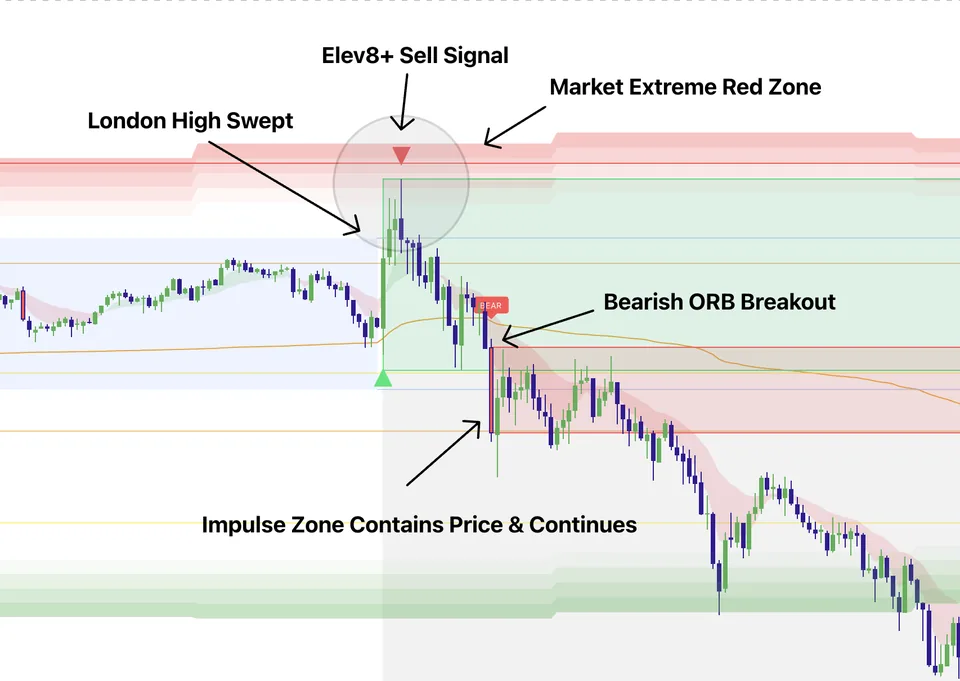
The Problem This Guide Helps You Solve
Reversal tools can trigger repeatedly in a strong trend. Compare their timing and failure cases, not just their most convincing chart examples.
Reversal Confirmation Model
Work through these checks in order. The examples explain a process; they are not instructions to place a trade.
1. Extreme Context
Identify whether price is stretched into a meaningful zone.
2. Shift Evidence
Require structure change or reclaim behavior before entry.
3. Attempt Control
Cap attempts and enforce fixed-risk invalidation.
Reversal Use Cases
Failed Breakout Reversal
Breakout fails at a key level and structure confirms a reversal.
No-Trade Reversal Signal
Signal prints mid-range without context and is filtered out.
Common Execution Mistakes To Avoid
-
Fading every strong impulse automatically.
-
Adding into invalidated reversal attempts.
-
Ignoring session timing and liquidity behavior.
Use the Elev8+ demo as one part of your comparison. Review what the signals show, where they can fail, and how they fit your own trading rules.
Related Guides
-
The Elev8+ Indicator Suite: What Each Tool Does
Compare the roles of Elev8+ Pro, Market Map, Market Extremes, VWAP Deviation, Reversal Blocks, Real FVG, and Momentum Gaps before building your chart.
-
Futures Reversal Indicators: What Confirms a Turn?
A possible reversal is not a confirmed change in direction. Combine the signal with a price level, an entry condition, and an exit plan before considering a trade.
-
TradingView Liquidity Sweeps: Read the Signal in Context
A sweep indicator flags moves through prior highs or lows. Check whether price returns through the level or continues beyond it before interpreting the signal.
-
TradingView Exhaustion Indicators: Read the Warning
Exhaustion indicators flag conditions that may suggest a move is stretched or slowing. A warning is a reason to review price action, not an automatic reversal trade.
Further Reading
About this guide
Published by Elev8+ Trading to explain trading concepts and our products. Elev8 sells the tools linked here; these guides are not independent product rankings or personalized financial advice. Chart examples illustrate a process, not audited trading results.
Dates identify substantive content updates, not a claim of independent expert review. Check current exchange, broker, and prop-firm rules before relying on a calculation. Ask a question or report a correction.