Elev8+ Training Ground
One Trading Framework. Specialized Tools for Every Decision.
The Elev8+ lessons follow one process: mark key levels, observe the price reaction, check entry criteria, and plan your risk and targets.
Learn the framework in order or jump directly to the indicator, strategy, or market concept you need today.
Start with the decision process. Add a tool only when it answers a specific question.
Mark key levels first
Separate reversal from continuation
Plan your stop before entry
Elev8+ Framework · NQ · 5m
Process- Location
- Event
- Response
- Structure
- Execution
The Elev8 Methodology
The same decision sequence for every setup
Do not skip directly from a level to an entry signal.
Location → Liquidity Event → Rejection or Acceptance → Displacement → Confirmation → Invalidation → Target
If price moves beyond a key level, then returns inside
Reversal Path
Look for a move back inside the level, a strong move in the opposite direction, and a retest of a confirmed Reversal Block or Real FVG zone before considering an entry.
If price breaks a key level and holds beyond it
Continuation Path
Look for closes beyond the level, a strong move in the same direction, and a retest of a confirmed Real FVG or Reversal Block zone that holds.
Do not assume price will reverse at every level. Watch how it responds, then check whether a reversal or continuation setup meets your rules.
Watch the Demo First:
Watch the demo to see a short breakdown of how the indicators and suite work together — with trade examples — then come back and follow the guide below.
How to Use This Guide:
Step 1: The Foundation
Mechanics & Framework
Learn the setup rules and the core reversal model. Practice identifying sweeps and confirming a setup before entering a trade.
Step 2: Advanced Strategy
Risk & Confluence
Combine session levels and volume-weighted average price (VWAP) with your setup rules. Decide your stop, target, and position size before entering.
Step 3: Systems & Growth
Expansion & Automation
Explore how the concepts apply to options, then learn about automated strategies and platform updates.
Course Progress
Track what you’ve completed
Check lessons as you finish them. Completed lessons are slightly greyed out and still clickable so you can re-read anytime. Progress saved on this device
0 / 0 completed
0%
Jump to a module
Each module covers one part of the trading process. Select a card to open its lessons.
Find an Indicator or Topic
Search the complete Elev8 reference library
Try a tool, setup, or term such as Real FVG, reversal block, sweep, CVD, VWAP, acceptance, or displacement.
Core • Start here • Module 1
Start Here
Understand the Elev8 framework, configure a clean chart, and learn the language used throughout the course.
3 articles
View Module
Core • Step 2 • Module 2
Learn the Core Trading Model
Learn liquidity, sweeps, acceptance, rejection, displacement, confirmation, and when a setup is invalid.
4 articles
View Module
Core • Step 3 • Module 3
Master the Elev8+ Toolkit
Learn what each indicator shows and when to use it, from key price levels and strong moves to entry confirmation.
9 articles
View Module
Core • Step 4 • Module 4
Execute and Manage Trades
Create a repeatable process for choosing entries, stops, targets, and position sizes, then reviewing each trade.
5 articles
View Module
Core • Step 5 • Module 5
Build High-Confluence Setups
Combine different types of information to assess a possible reversal or continuation without overcrowding your chart.
6 articles
View Module
Optional • Specialized • Module 6
Specialized Applications
After the core lessons, explore options and longer-term chart analysis.
1 article
View Module
Optional • Advanced • Module 7
Automation and New Features
Learn the current automation workflow, platform updates, and advanced tools after completing the core lessons.
1 article
View Module
No matching lesson found. Try a shorter term such as "sweep," "VWAP," "FVG," or "risk."
One Tool, One Primary Job
Use the tool that answers the question in front of you
You do not need every indicator on every trade. Start with the decision you need to make, then select the appropriate tool.
| Tool | Primary job | Question it answers |
|---|---|---|
| Market Map | Location | Where are the key price and session levels? |
| VWAP Deviation | Extension | How far has price moved from VWAP? |
| Market Extremes | Exhaustion / regime | Is the current move stretched or changing character? |
| Momentum Gaps | Displacement | Did price move with meaningful force? |
| Reversal Blocks | Reaction / retest | Where can price retest a confirmed reversal zone? |
| Real FVG | Structure-validated retest | Which gap followed a strong move and a break of structure? |
| Elev8+ Pro | Execution / confirmation | Has the setup met the execution criteria? |
Core • Start here • Module 1
Start Here
Understand the Elev8 framework, configure a clean chart, and learn the language used throughout the course.
3 articles
Core • Start here • Module 1
Start Here
Understand the Elev8 framework, configure a clean chart, and learn the language used throughout the course.
3 articles
7 MIN READ
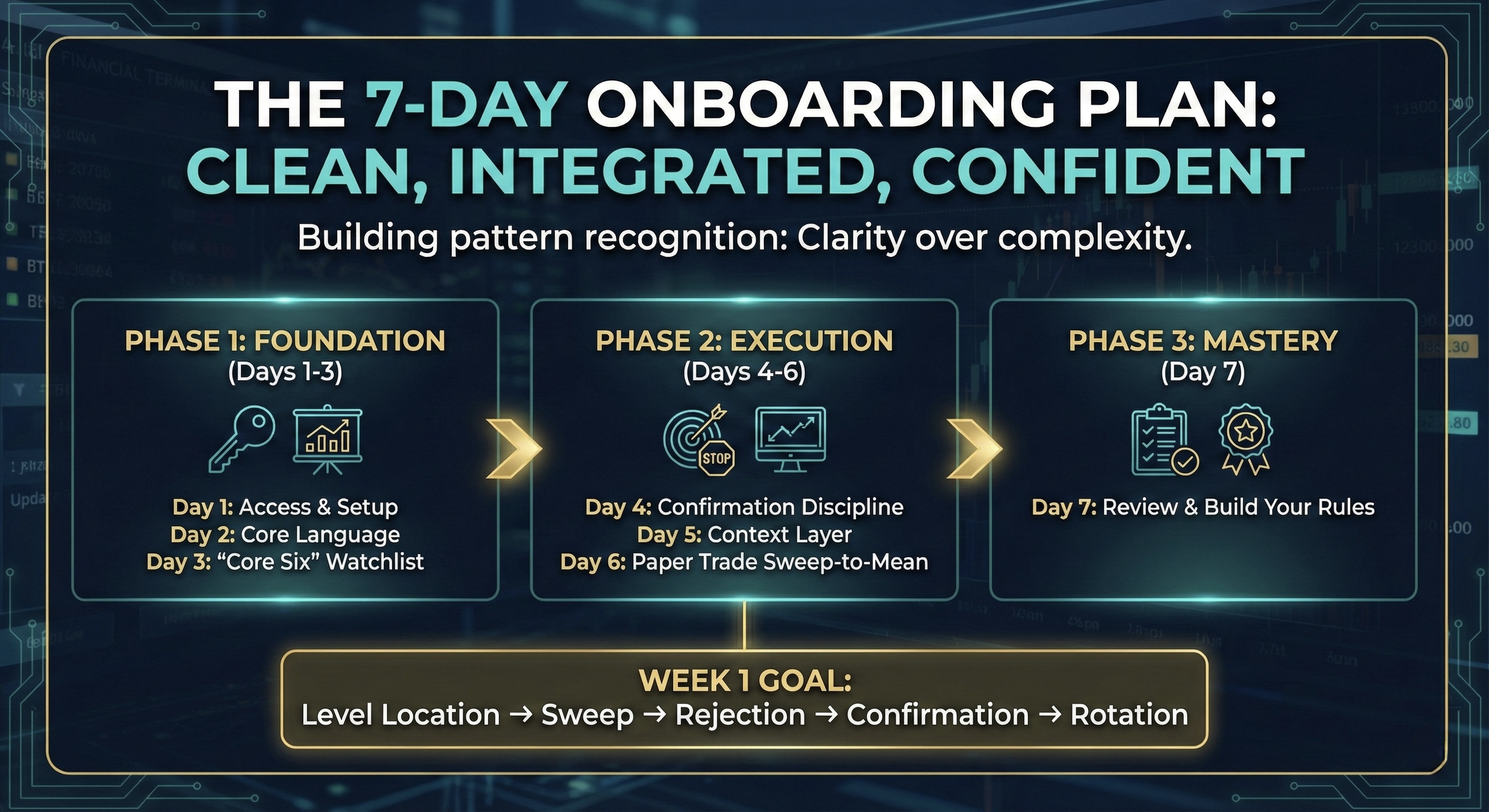
Your First 7 Days With Elev8+ (A Simple Onboarding Plan)
Learning outcome
Follow a practical seven-day Elev8 onboarding plan covering chart setup, core methodology, daily preparation, execution, and review.
Read this lesson →
4 MIN READ
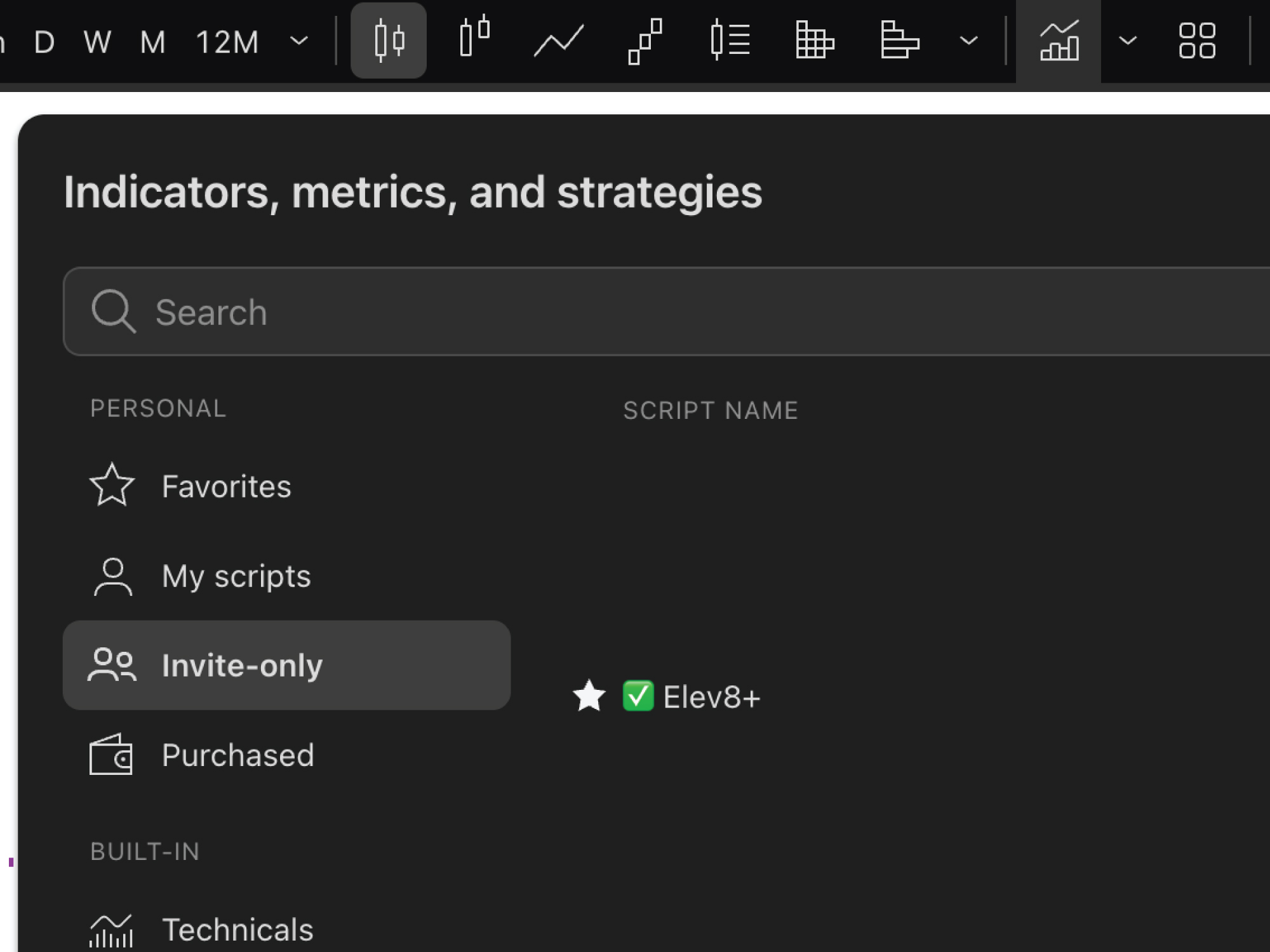
How to Install and Activate Elev8+ on TradingView
Learning outcome
Learn how to accept your Elev8 invite, install the indicator on TradingView, configure a clean chart, and verify activation.
Read this lesson →
6 MIN READ
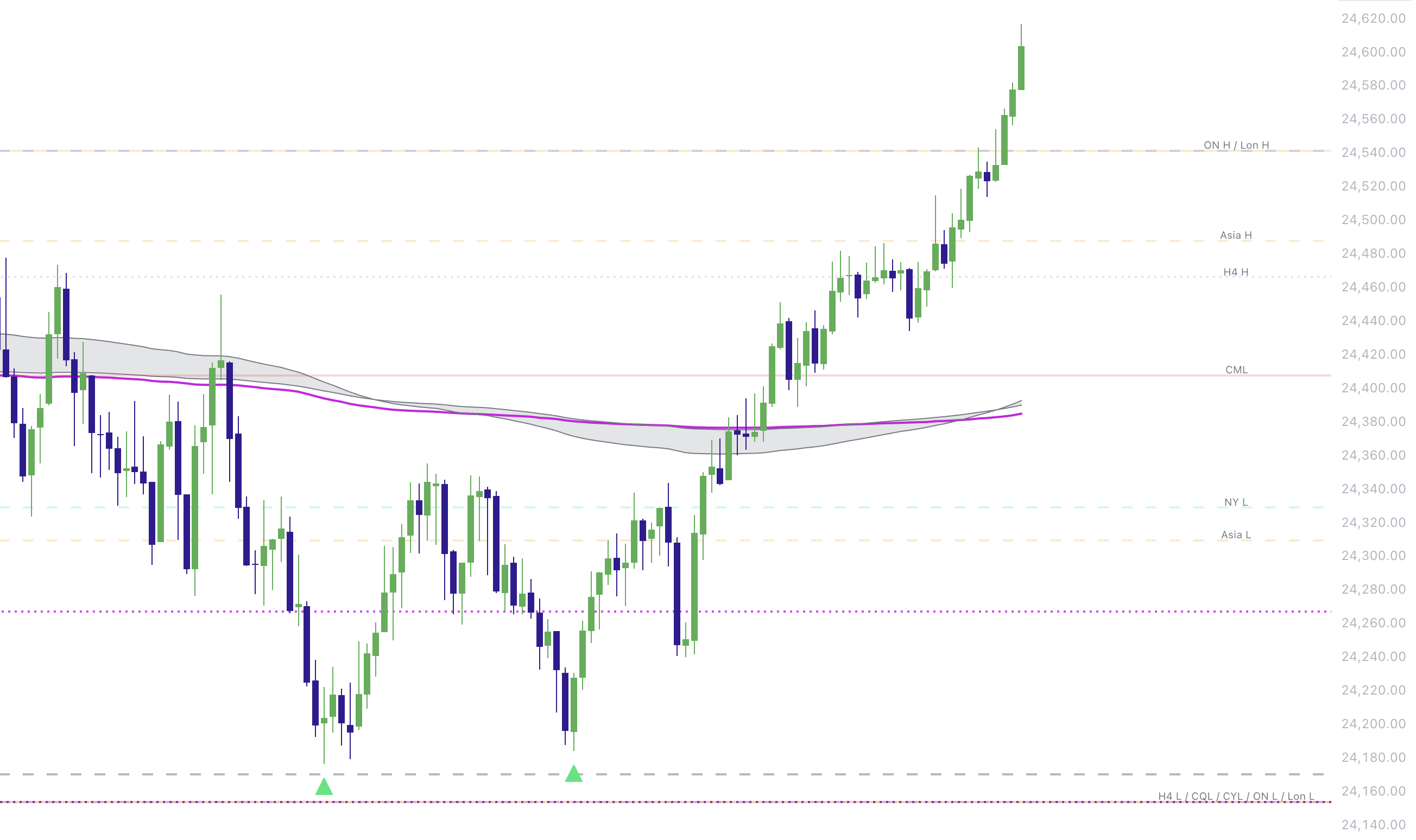
Elev8+ Pro Indicator: Complete Chart Legend & Guide
Learning outcome
Learn what each Elev8+ Pro chart label, liquidity level, session reference, confirmation, and visual element means.
Read this lesson →
Core • Step 2 • Module 2
Learn the Core Trading Model
Learn liquidity, sweeps, acceptance, rejection, displacement, confirmation, and when a setup is invalid.
4 articles
Core • Step 2 • Module 2
Learn the Core Trading Model
Learn liquidity, sweeps, acceptance, rejection, displacement, confirmation, and when a setup is invalid.
4 articles
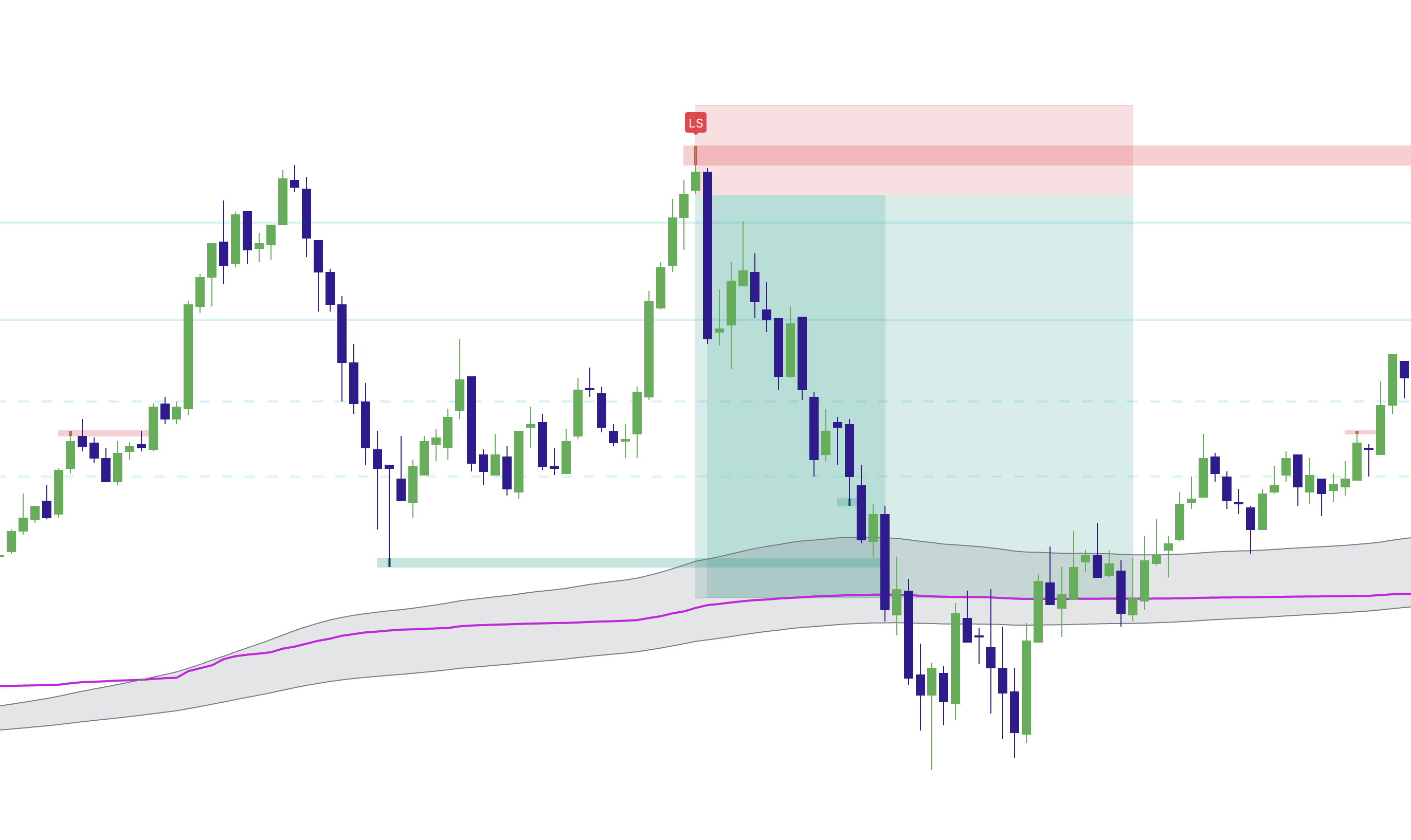
7 MIN READ
How Liquidity Sweeps Work on NQ Futures: The Complete Playbook for Reversal Traders
Learning outcome
Learn how NQ liquidity sweeps form, how to distinguish rejection from acceptance, and how to confirm reversal setups.
Read this lesson →
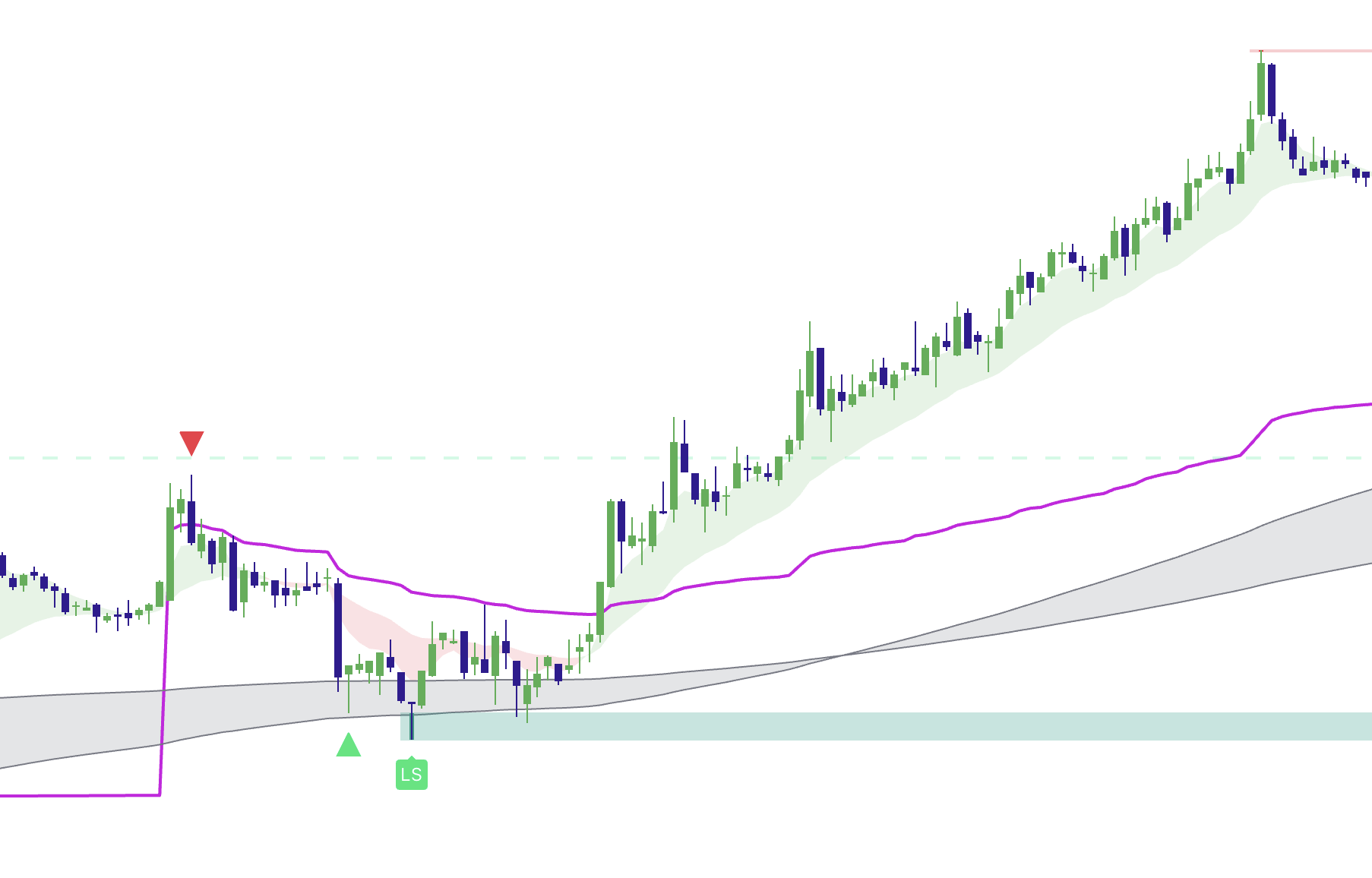
6 MIN READ
The Elev8+ Strategy Guide: Mastering Institutional Reversals
Learning outcome
Learn the complete Elev8 decision process for location, liquidity, response, displacement, confirmation, risk, and targets.
Read this lesson →
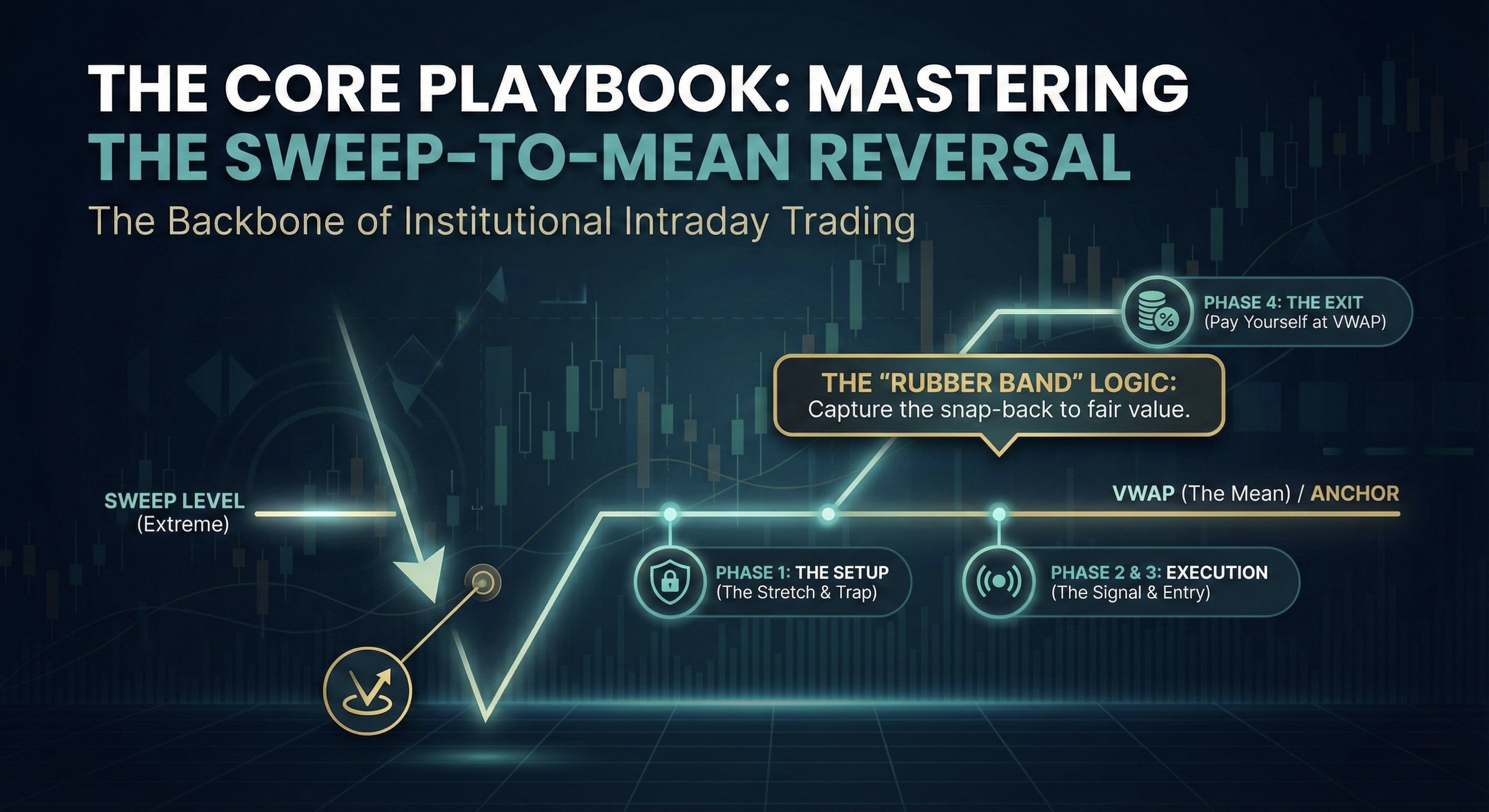
6 MIN READ
The Elev8+ "One Trade" Setup: High Probability & Fixed Risk
Learning outcome
Learn the Sweep-to-Mean setup, including location, failed continuation, confirmation, structural risk, and value targets.
Read this lesson →
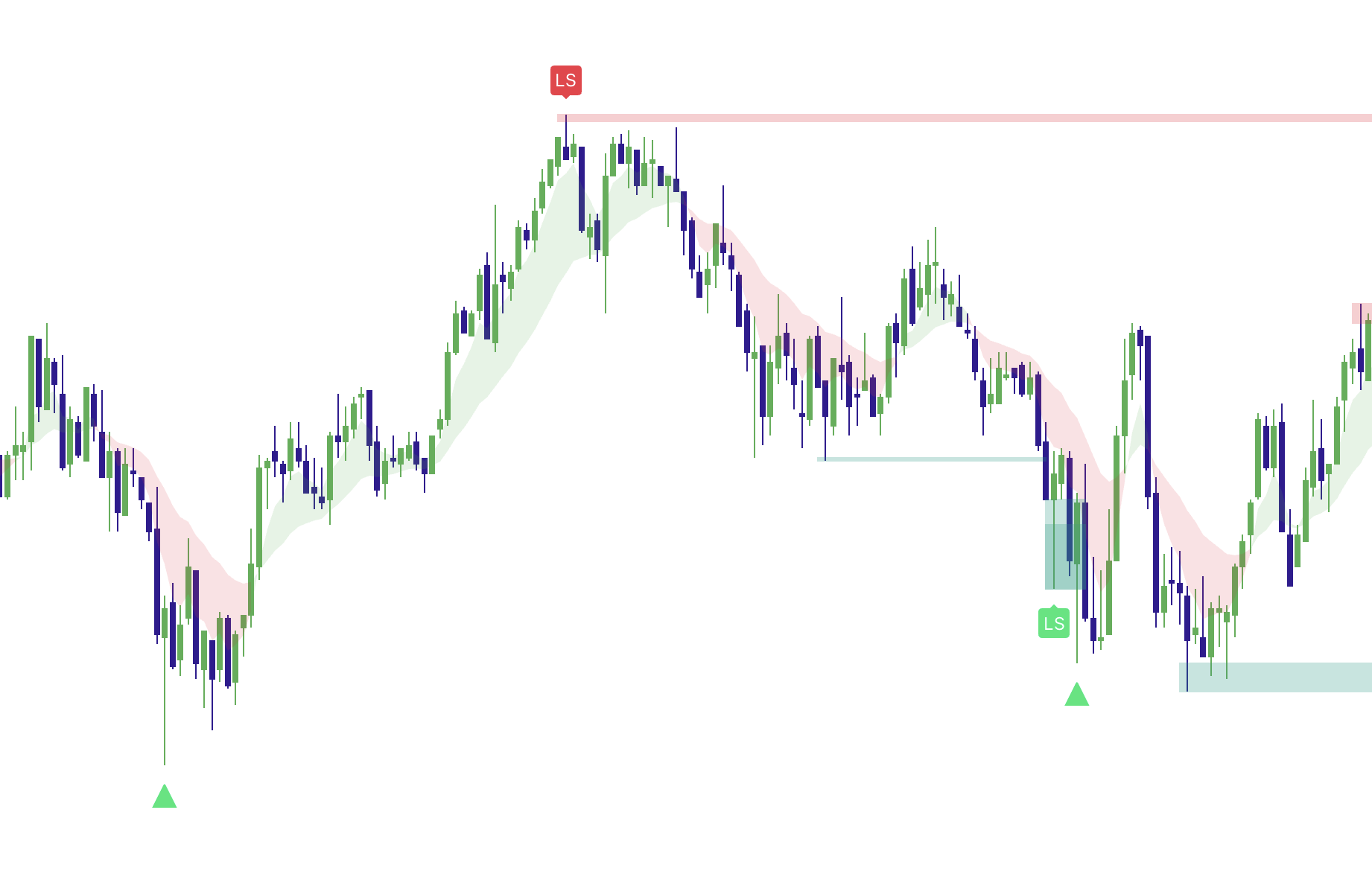
5 MIN READ
Elev8+ Sweep Reversal Playbook for Smart Money Trading
Learning outcome
Learn a repeatable sweep-reversal process using meaningful liquidity, rejection, displacement, invalidation, and targets.
Read this lesson →
Core • Step 3 • Module 3
Master the Elev8+ Toolkit
Learn what each indicator shows and when to use it, from key price levels and strong moves to entry confirmation.
9 articles
Core • Step 3 • Module 3
Master the Elev8+ Toolkit
Learn what each indicator shows and when to use it, from key price levels and strong moves to entry confirmation.
9 articles
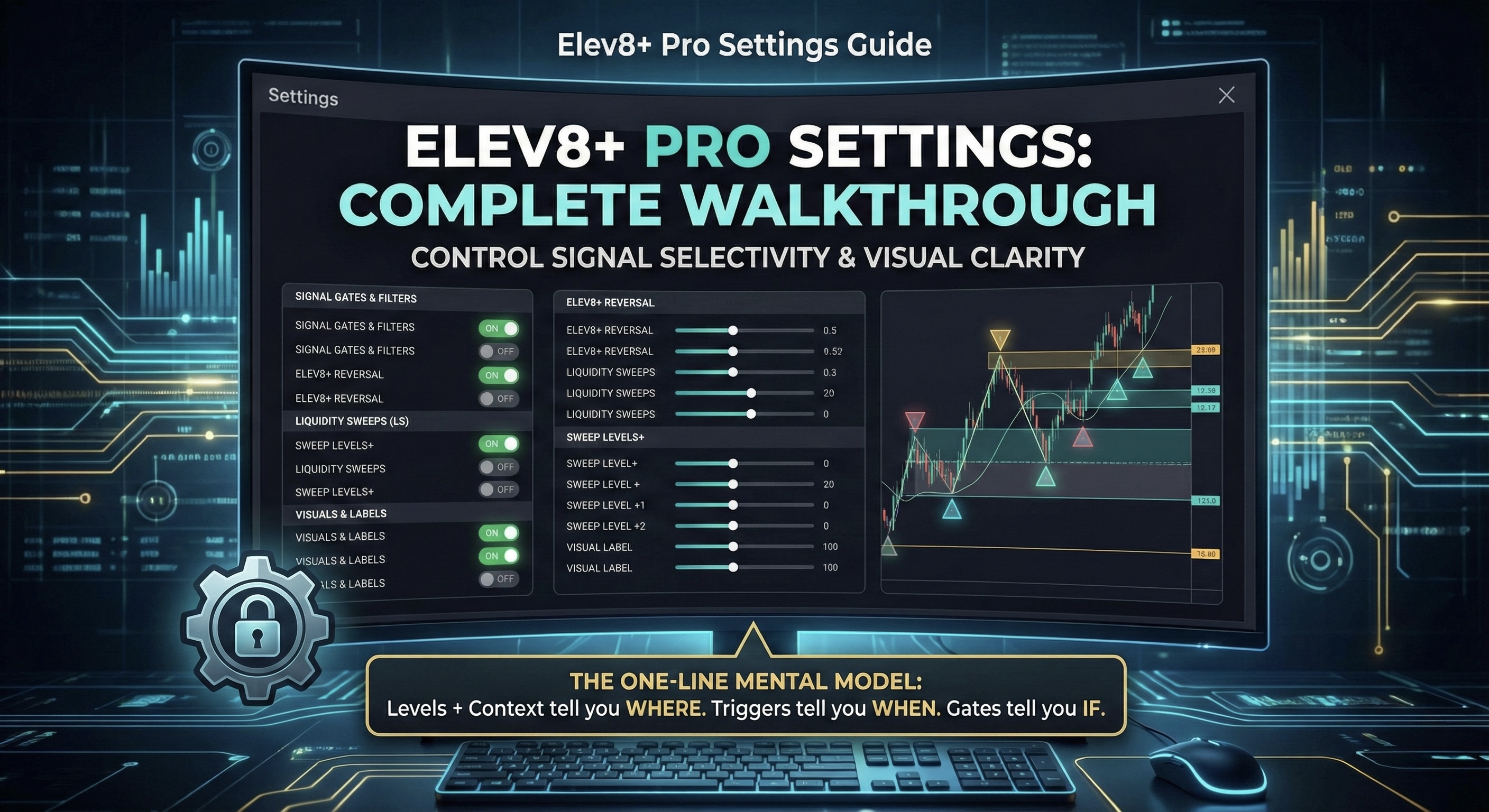
6 MIN READ
Elev8+ Pro Settings Guide
Learning outcome
Learn what each Elev8+ Pro setting controls and how to adjust filters deliberately without overcomplicating your chart.
Read this lesson →
5 MIN READ
Elev8+ Sweep Signals: LS vs Triangle Accuracy Guide
Learning outcome
Learn the difference between Triangle and LS confirmations, including frequency, selectivity, location, and proper use.
Read this lesson →
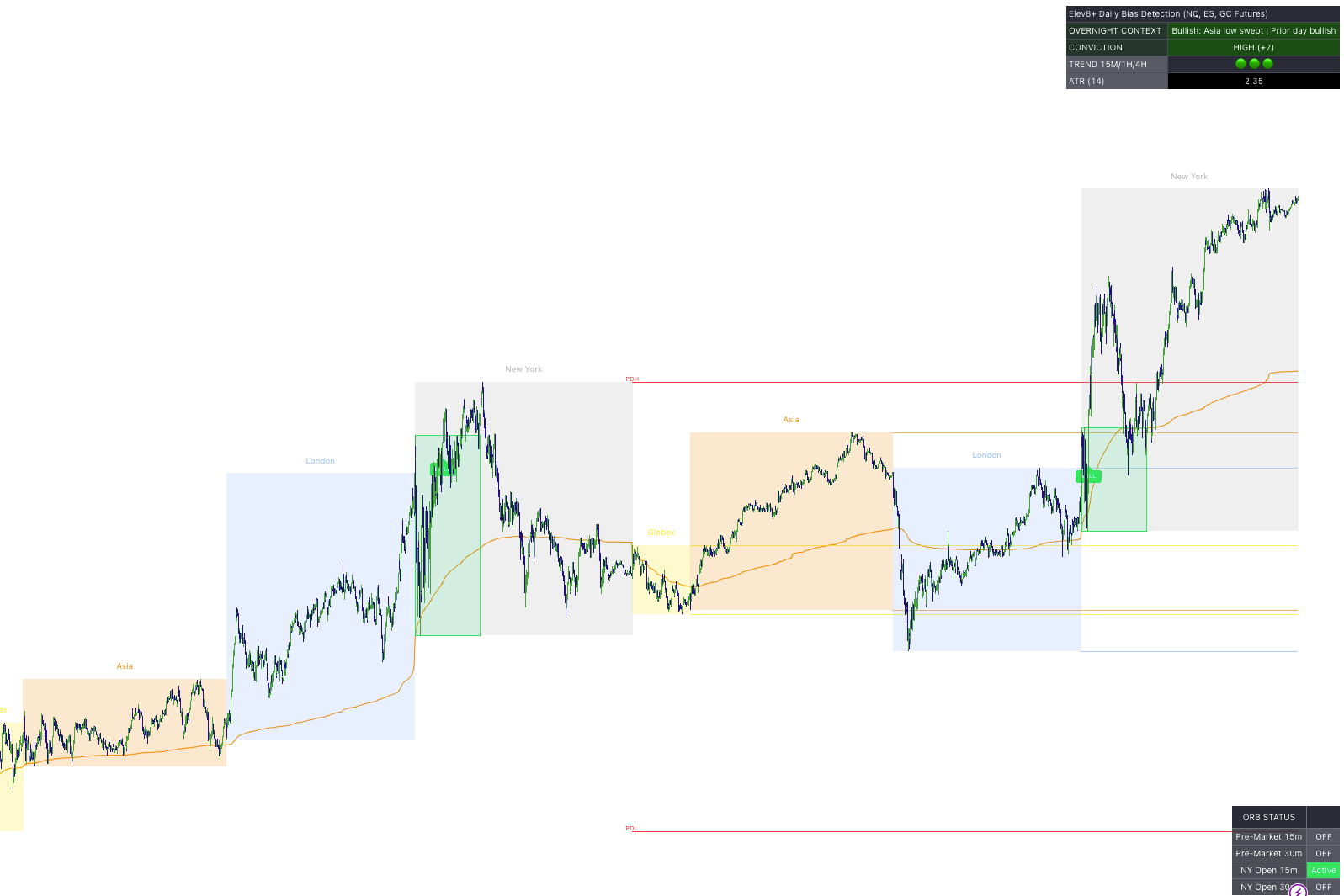
15 MIN READ
Elev8+ Market Map: Sessions, ORB Breakouts, Daily NY Bias Dashboard & Daily Fib Levels
Learning outcome
Learn how Market Map organizes sessions, ORB structure, PDH/PDL, daily bias, and key liquidity locations for planning.
Read this lesson →
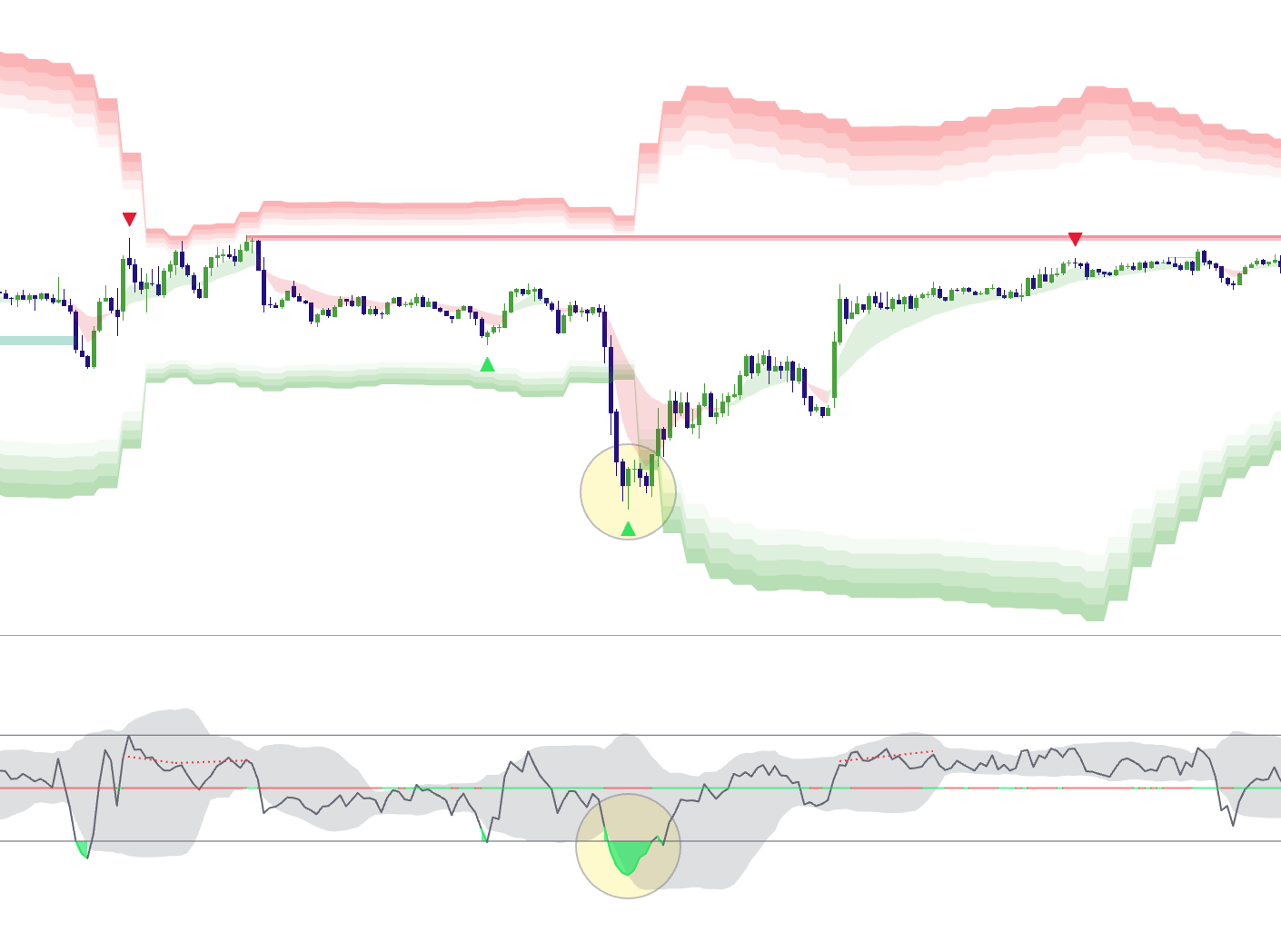
10 MIN READ
Elev8+ Market Extremes — How to Spot Exhaustion Areas and Stack Confluence with Pro Reversal Signals
Learning outcome
Learn how Market Extremes identifies exhaustion, divergence, regime conditions, and higher-timeframe extension zones.
Read this lesson →
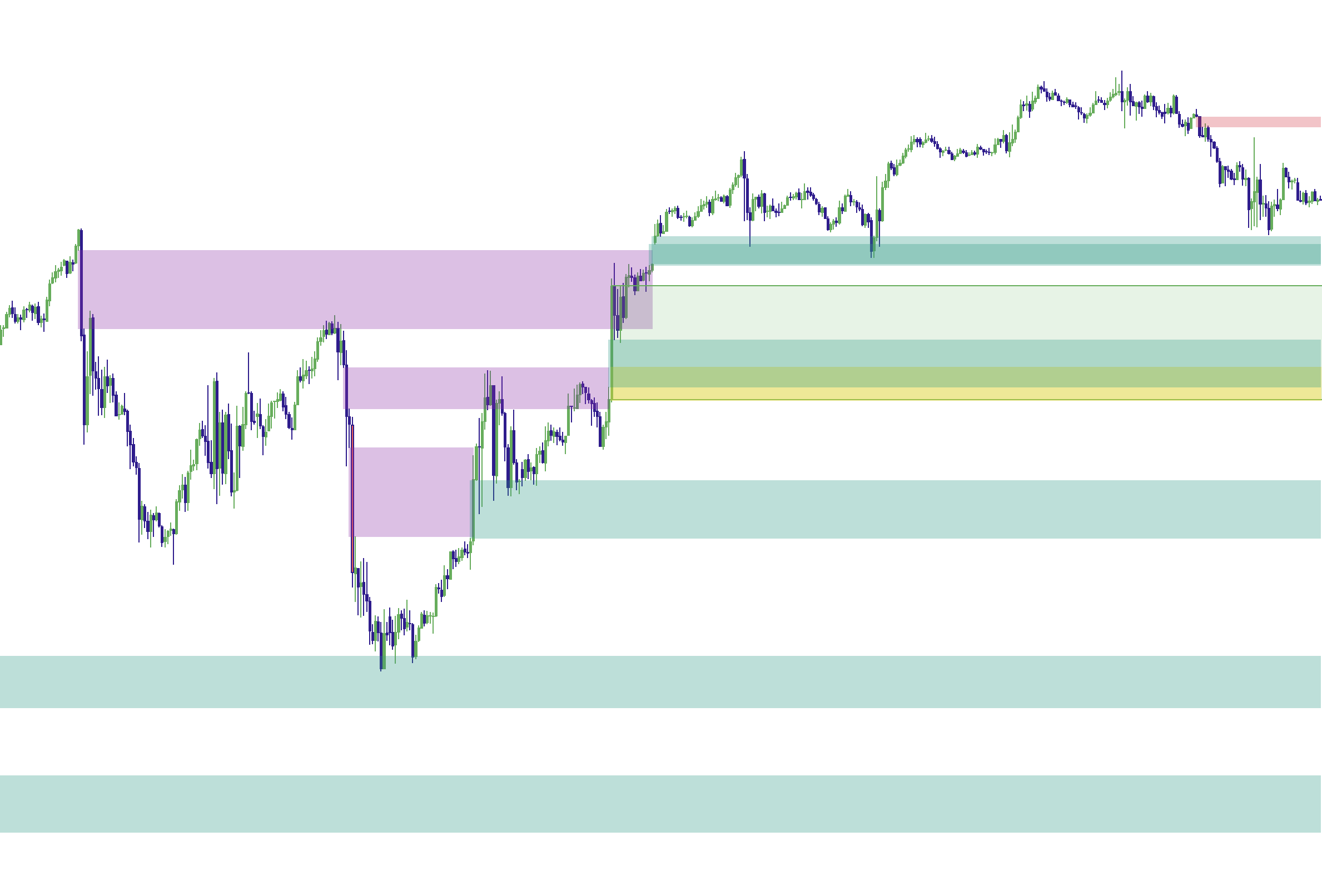
11 MIN READ
Elev8+ Momentum Gaps: Impulse Zones, FVGs, and Confluence for Cleaner Reversal Setups
Learning outcome
Learn how Momentum Gaps identifies displacement, FVGs, impulse zones, and confluence for cleaner entries and invalidation.
Read this lesson →
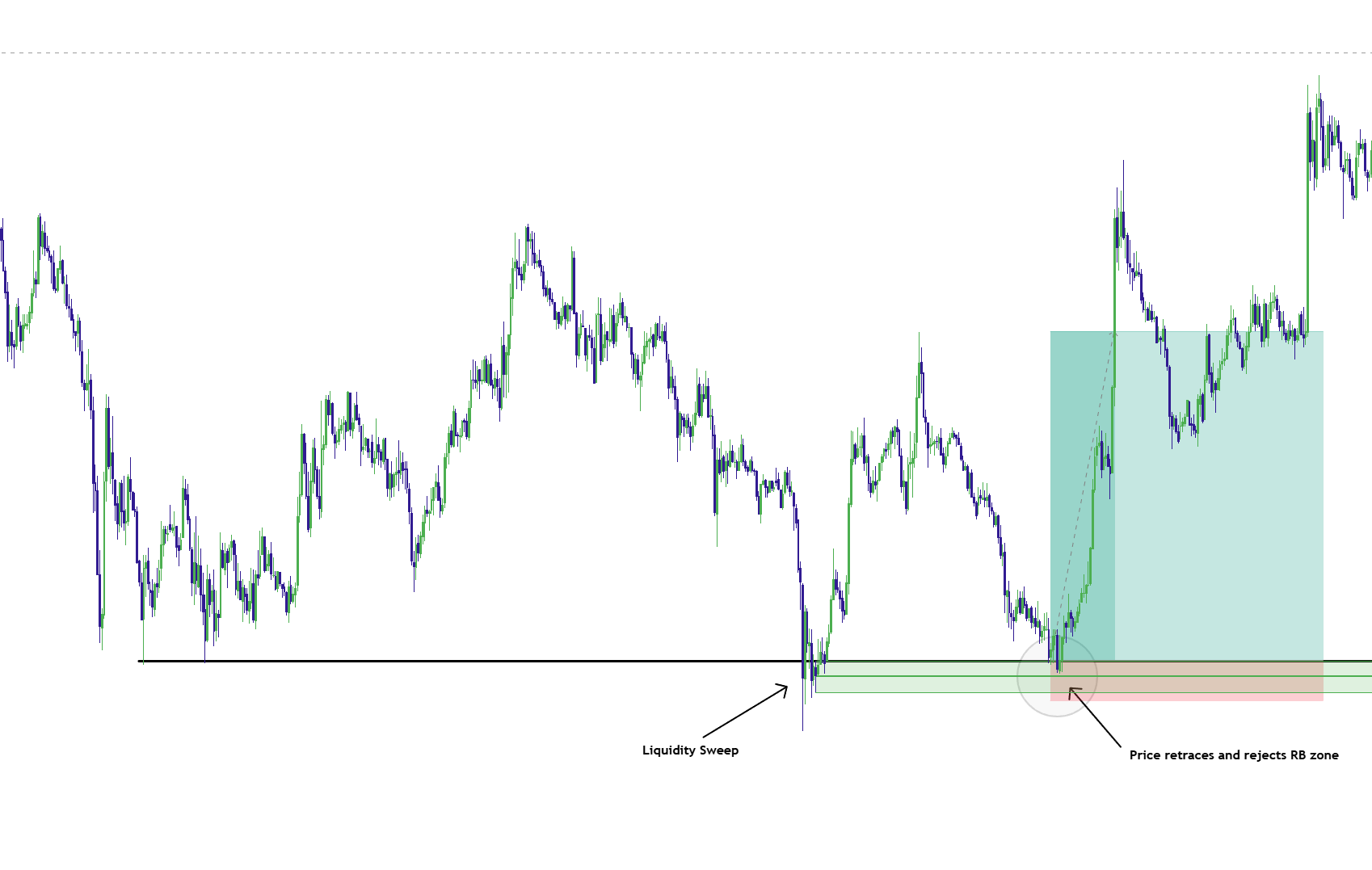
19 MIN READ
Elev8+ Reversal Blocks: CE Reaction Zones, Liquidity Sweeps, and High-Probability Pullback Entries
Learning outcome
Learn how validated Reversal Blocks form, how CE retests behave, and how to confirm reaction zones before entry.
Read this lesson →
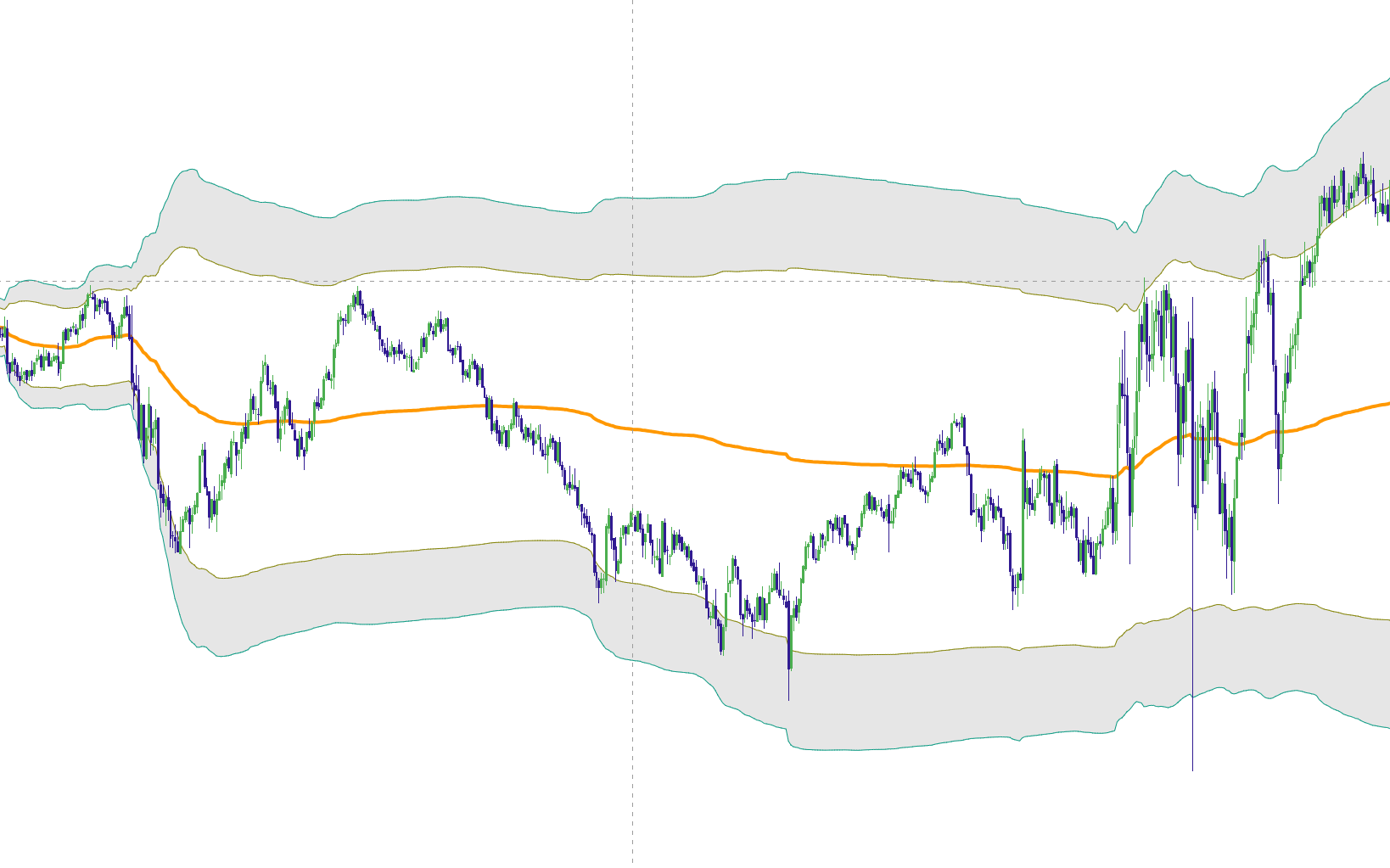
17 MIN READ
Elev8+ VWAP Deviation: 2–3 SD Extreme Zones, Mean Reversion, and High-Quality Reversal Setups
Learning outcome
Learn how VWAP deviation bands identify extension, acceptance, rejection, and qualified mean-reversion conditions.
Read this lesson →

19 MIN READ
Elev8+ Real FVG: Structure-Validated Fair Value Gaps for High-Probability Trend Continuation
Learning outcome
Learn how Real FVG filters gaps through swing structure, displacement, gap quality, and defended continuation retests.
Read this lesson →
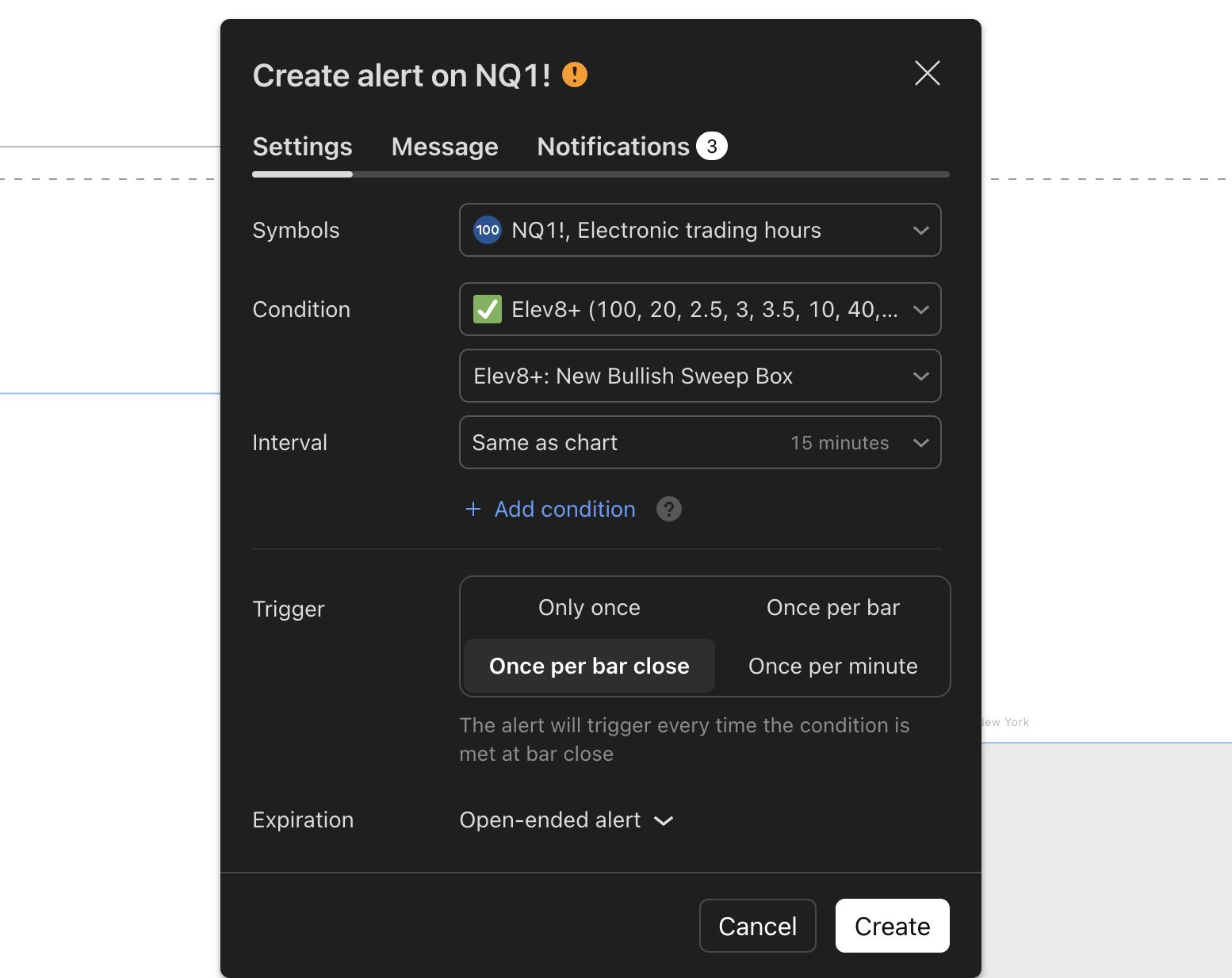
3 MIN READ
How to Create Elev8+ TradingView Alerts for Sweep Reversals
Learning outcome
Learn how to configure TradingView alerts for Elev8 chart signals and level events without treating alerts as automatic entries.
Read this lesson →
Core • Step 4 • Module 4
Execute and Manage Trades
Create a repeatable process for choosing entries, stops, targets, and position sizes, then reviewing each trade.
5 articles
Core • Step 4 • Module 4
Execute and Manage Trades
Create a repeatable process for choosing entries, stops, targets, and position sizes, then reviewing each trade.
5 articles
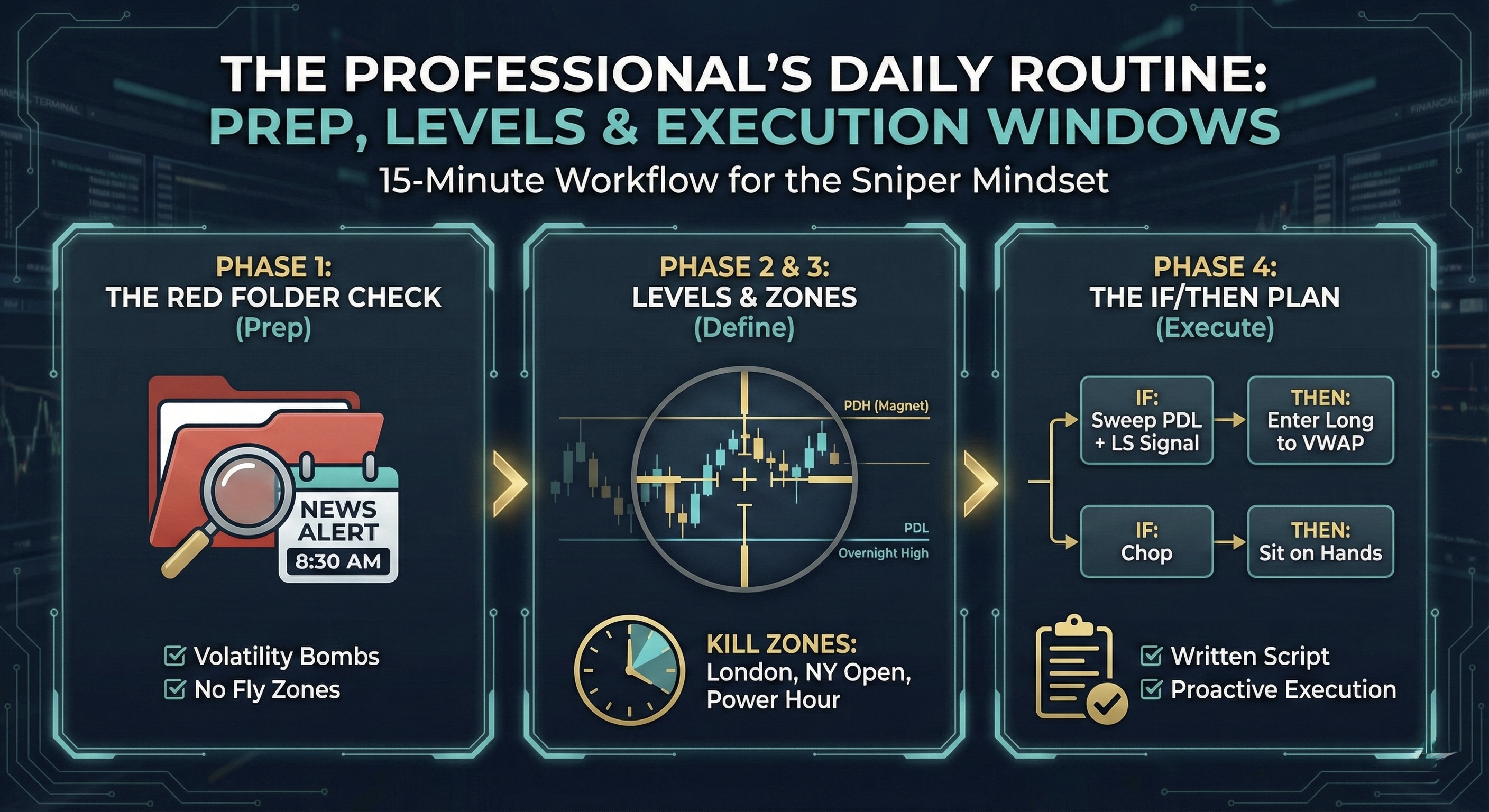
5 MIN READ
The Elev8+ Daily Workflow: From Pre-Market Prep to Closing Bell
Learning outcome
Build a repeatable Elev8 routine for premarket planning, key levels, execution windows, risk decisions, and review.
Read this lesson →
5 MIN READ
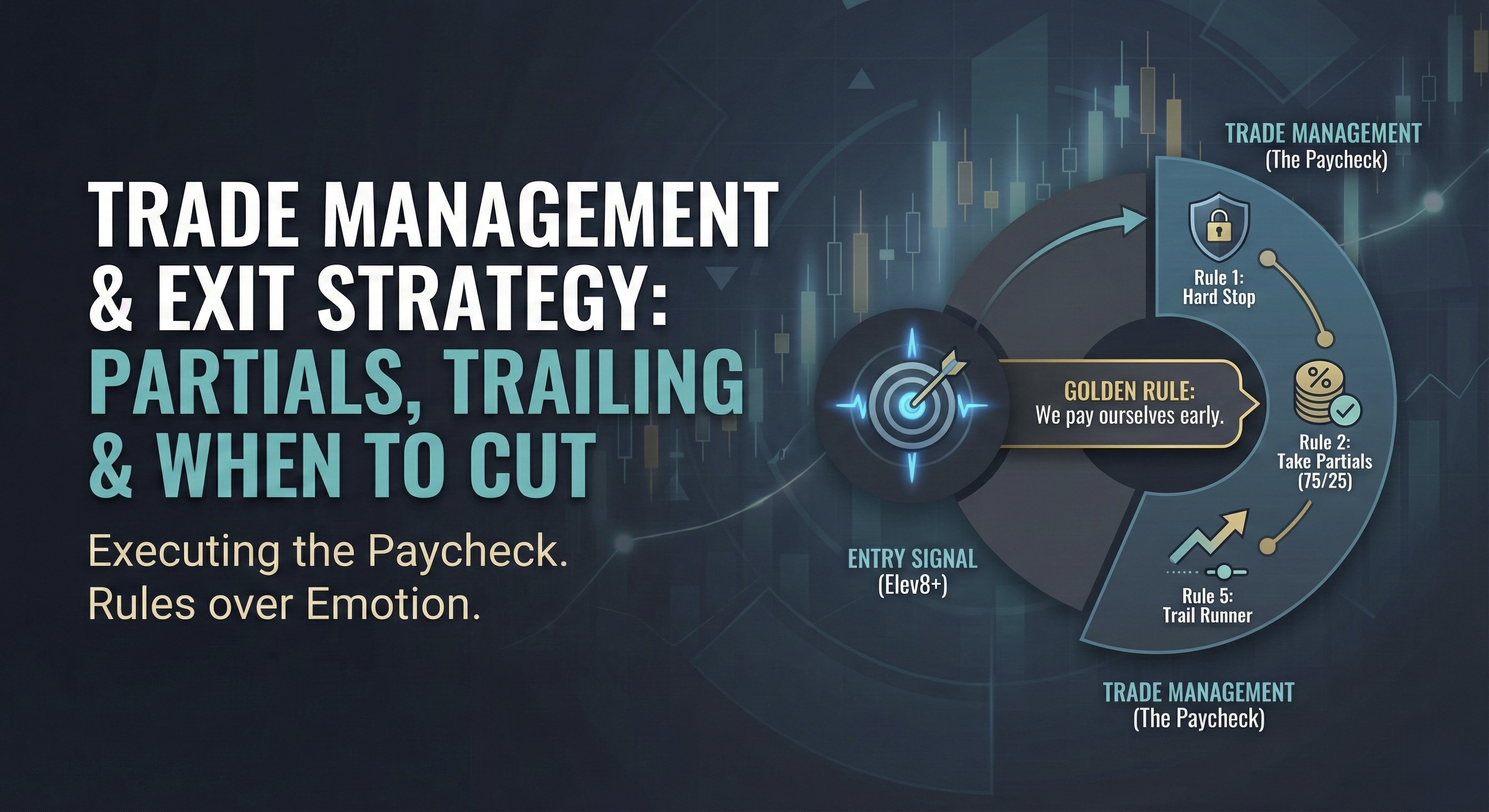
Trade Management & Exit Strategy: Partials, Trailing & When to Cut
Learning outcome
Learn how to define structural stops, manage partials, trail responsibly, cut invalidated trades, and plan exits.
Read this lesson →
7 MIN READ
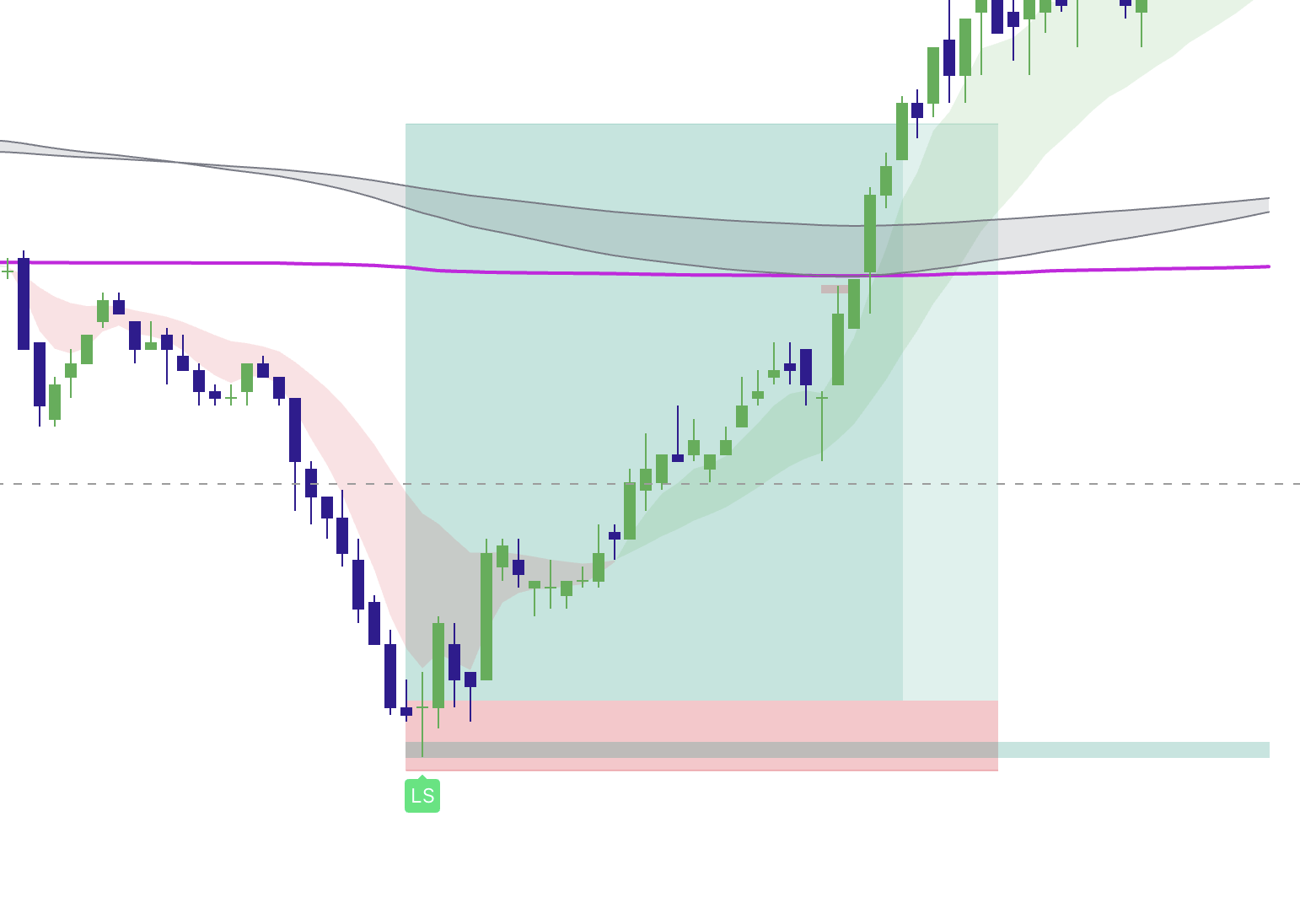
Beginner Mistakes and Best Practices for Using Elev8+
Learning outcome
Learn how to avoid common Elev8 mistakes involving poor location, premature entries, weak confirmation, and inconsistent risk.
Read this lesson →
6 MIN READ
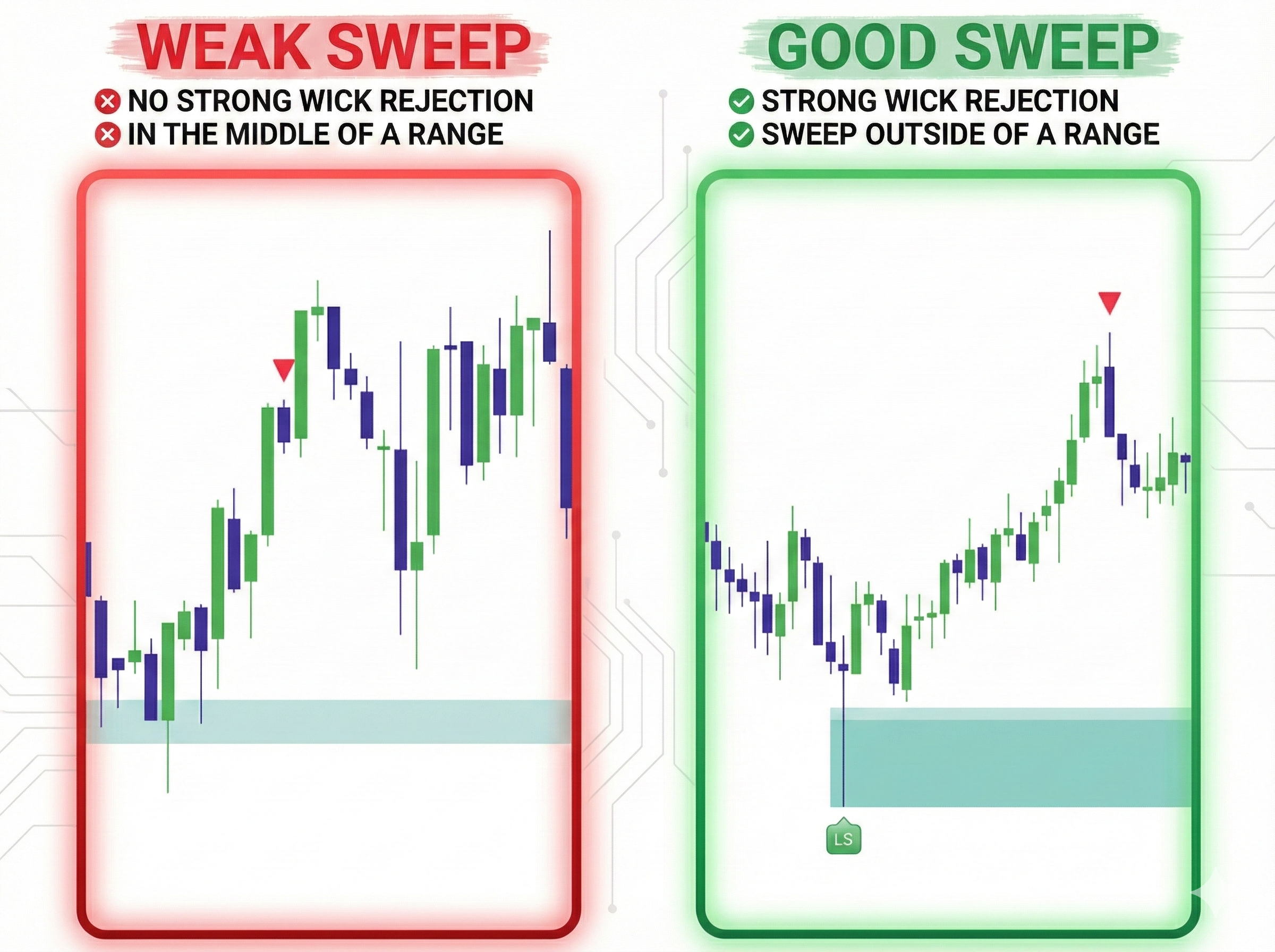
Sweep Invalidation Rules: When an Elev8+ Sweep Is NOT a Trade
Learning outcome
Learn the filters that invalidate weak sweeps, including poor location, acceptance, missing displacement, and unclear risk.
Read this lesson →
5 MIN READ
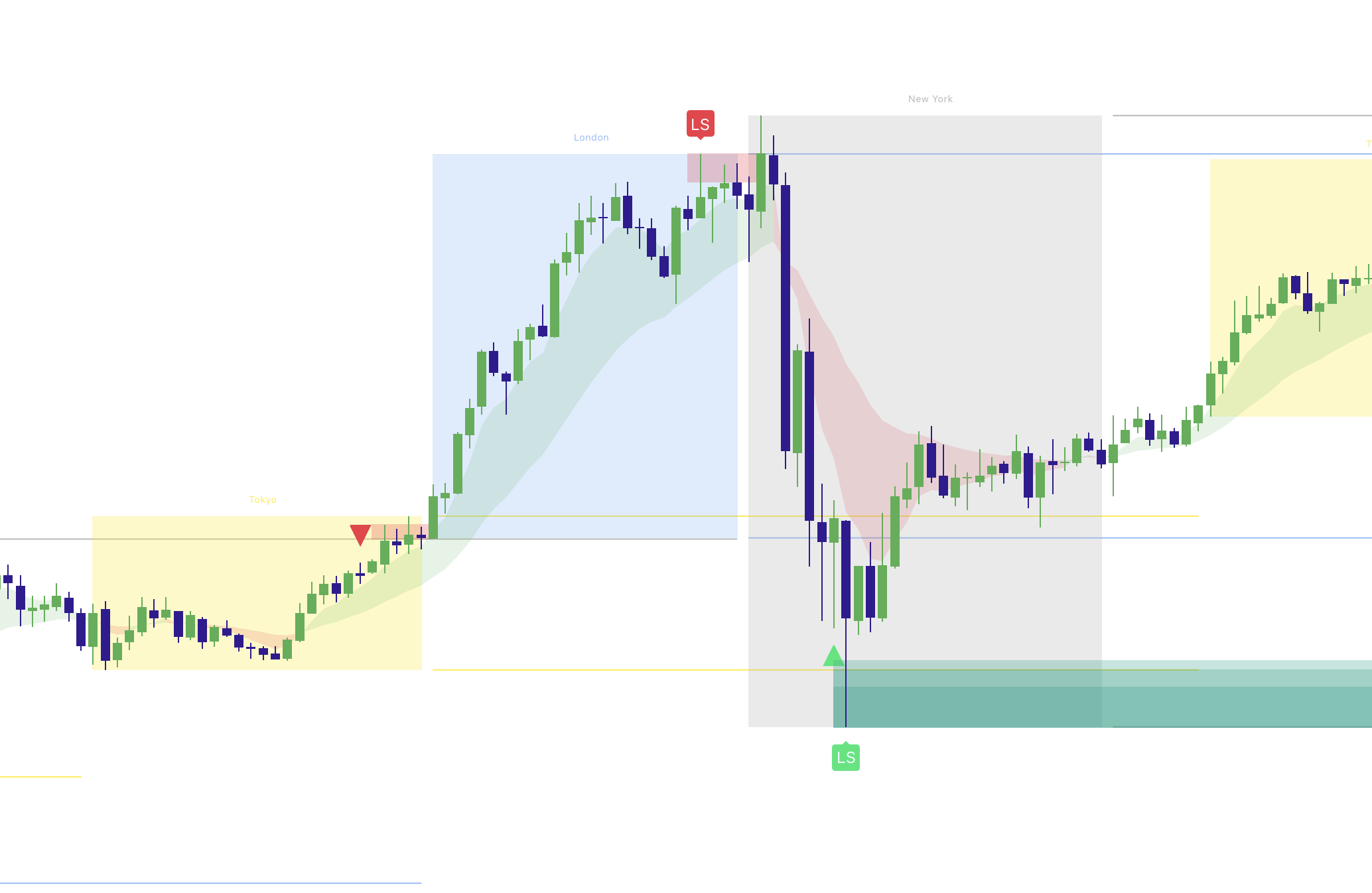
Best Intraday Time Windows for Elev8+ Liquidity Sweeps
Learning outcome
Learn how London, New York, and late-session conditions affect liquidity sweeps without treating time as an entry signal.
Read this lesson →
Core • Step 5 • Module 5
Build High-Confluence Setups
Combine different types of information to assess a possible reversal or continuation without overcrowding your chart.
6 articles
Core • Step 5 • Module 5
Build High-Confluence Setups
Combine different types of information to assess a possible reversal or continuation without overcrowding your chart.
6 articles
4 MIN READ
Sweep + VWAP Strategy for Asymmetric Elev8+ Trades
Learning outcome
Learn how to combine a qualified liquidity sweep with rejection and VWAP targets for a structured mean-reversion setup.
Read this lesson →
8 MIN READ
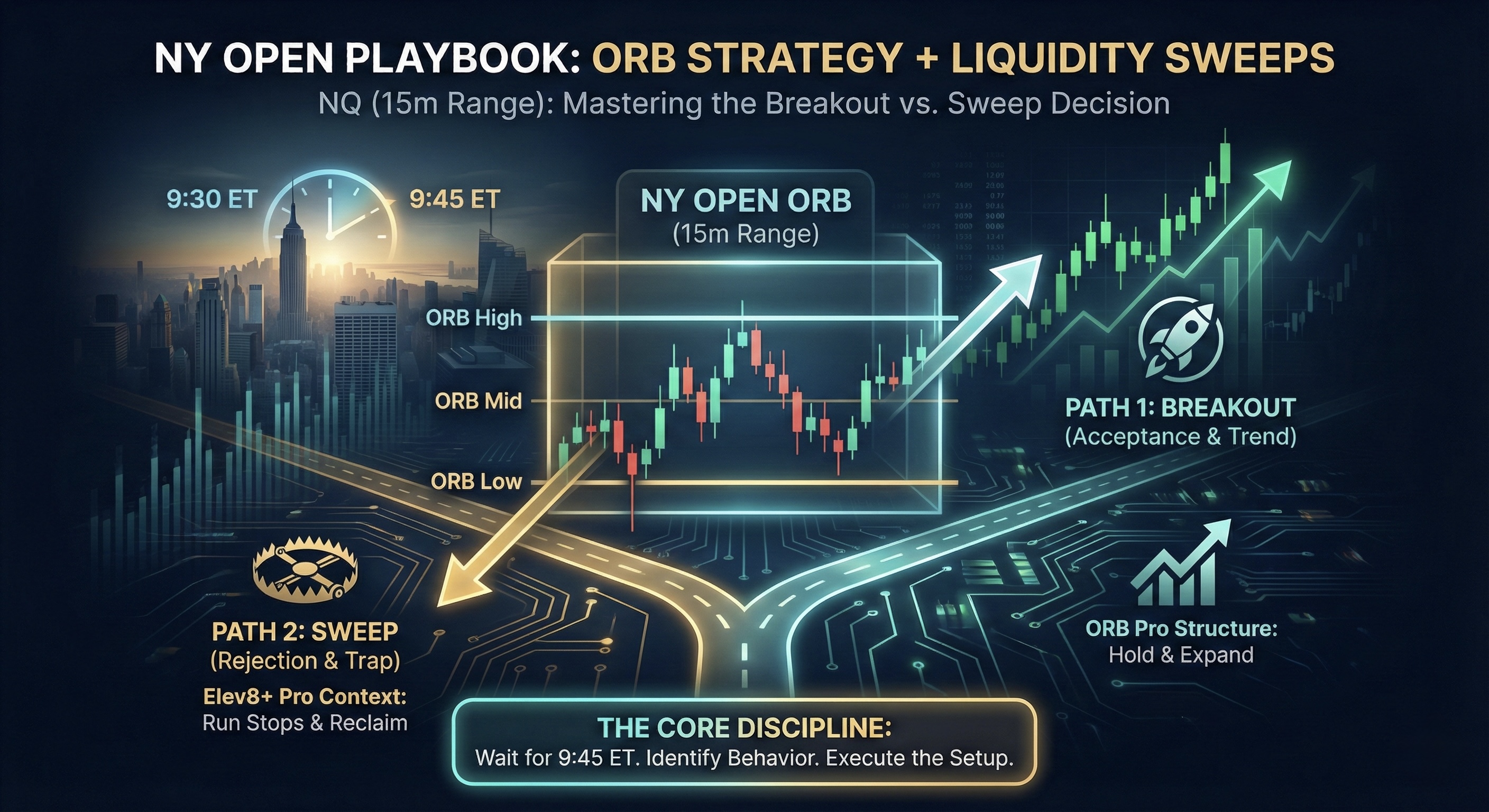
NY Open 15m ORB Strategy for NQ: Breakouts vs Sweeps
Learning outcome
Learn how to distinguish an accepted NY open ORB breakout from a sweep-and-reclaim reversal on NQ.
Read this lesson →
8 MIN READ
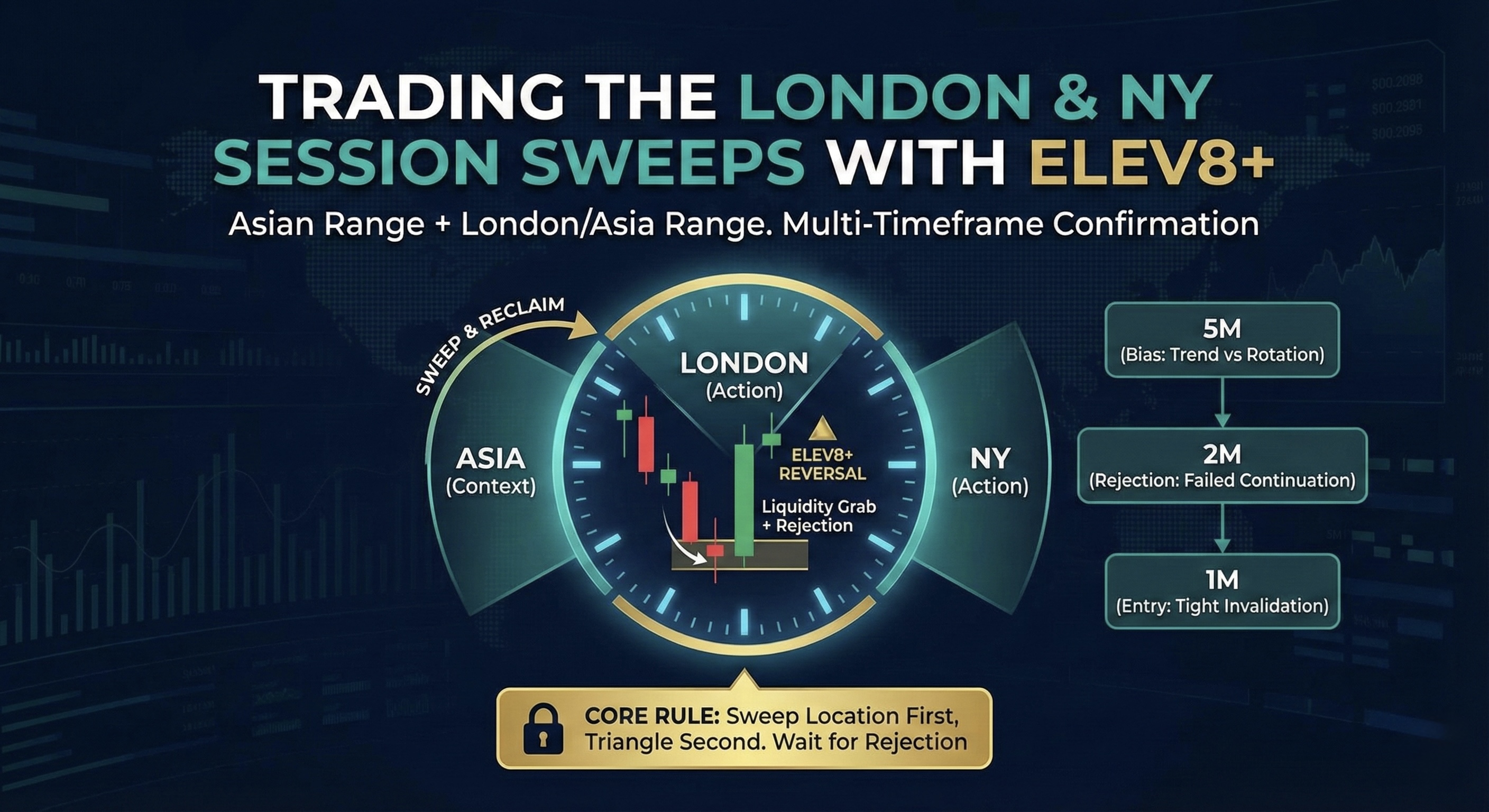
How to Trade London & NY Session Liquidity Sweeps with Elev8+ (Asian Range + London High/Low)
Learning outcome
Learn how to evaluate London and New York session sweeps using range liquidity, rejection, acceptance, and confirmation.
Read this lesson →
5 MIN READ
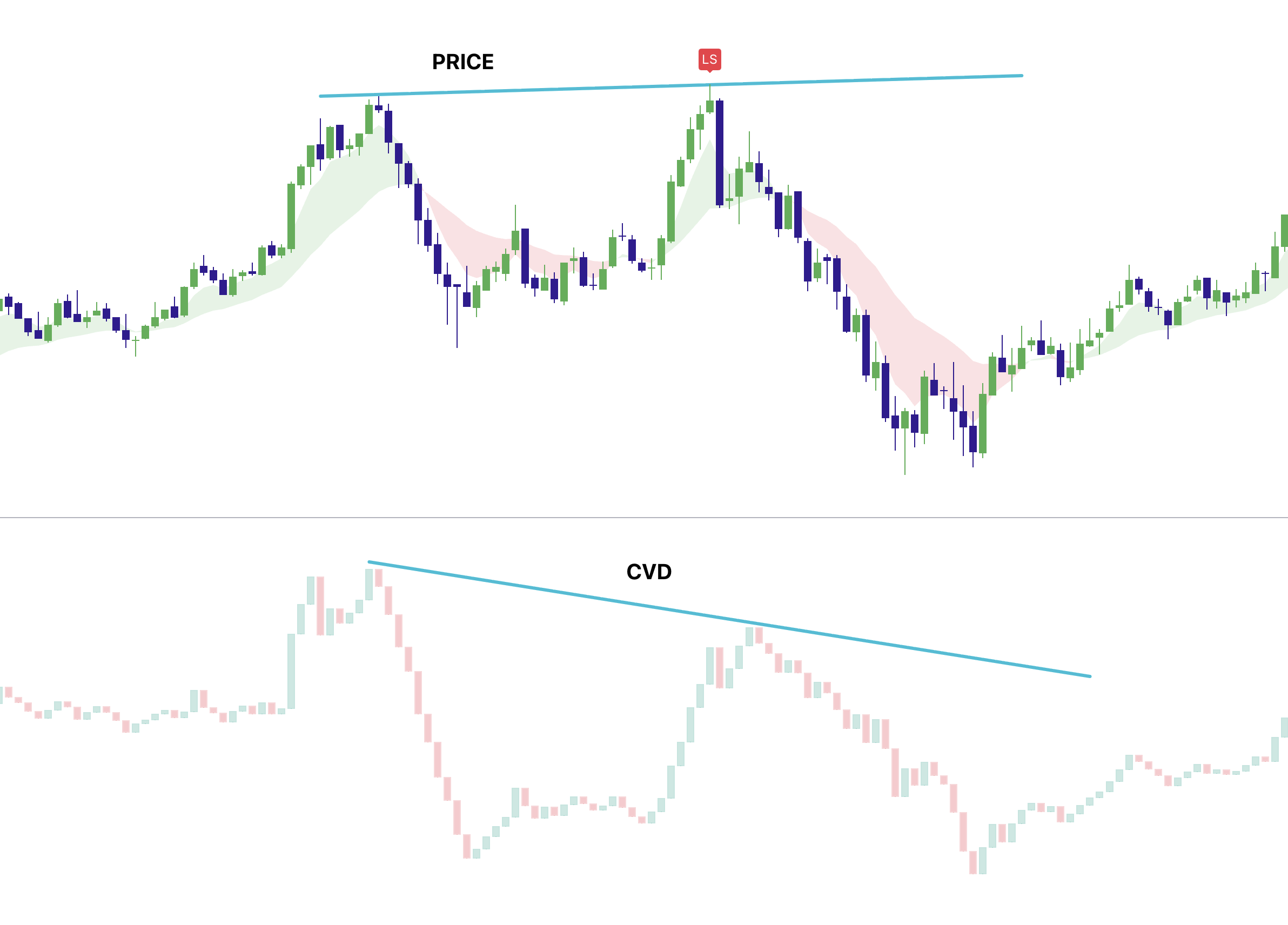
Advanced Order-Flow & Absorption Confirmation for Elev8+ Sweeps
Learning outcome
Learn how CVD, absorption, and order flow can confirm whether aggression is succeeding or failing at a liquidity level.
Read this lesson →
5 MIN READ
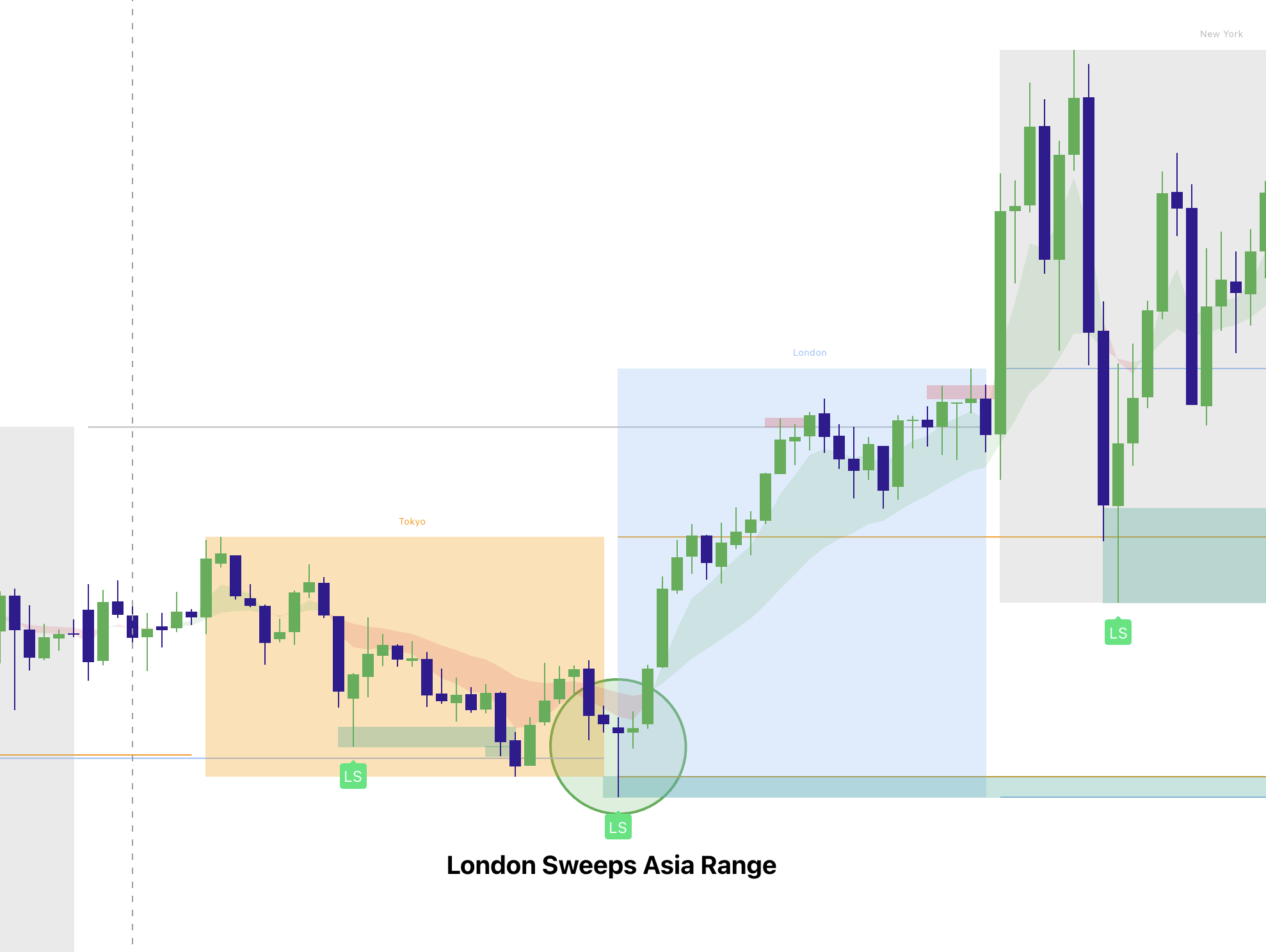
Institutional Liquidity & Macro Sweep Framework for Elev8+
Learning outcome
Learn how macro liquidity, positioning, gamma context, and higher-timeframe magnets influence intraday Elev8 setups.
Read this lesson →
2 MIN READ
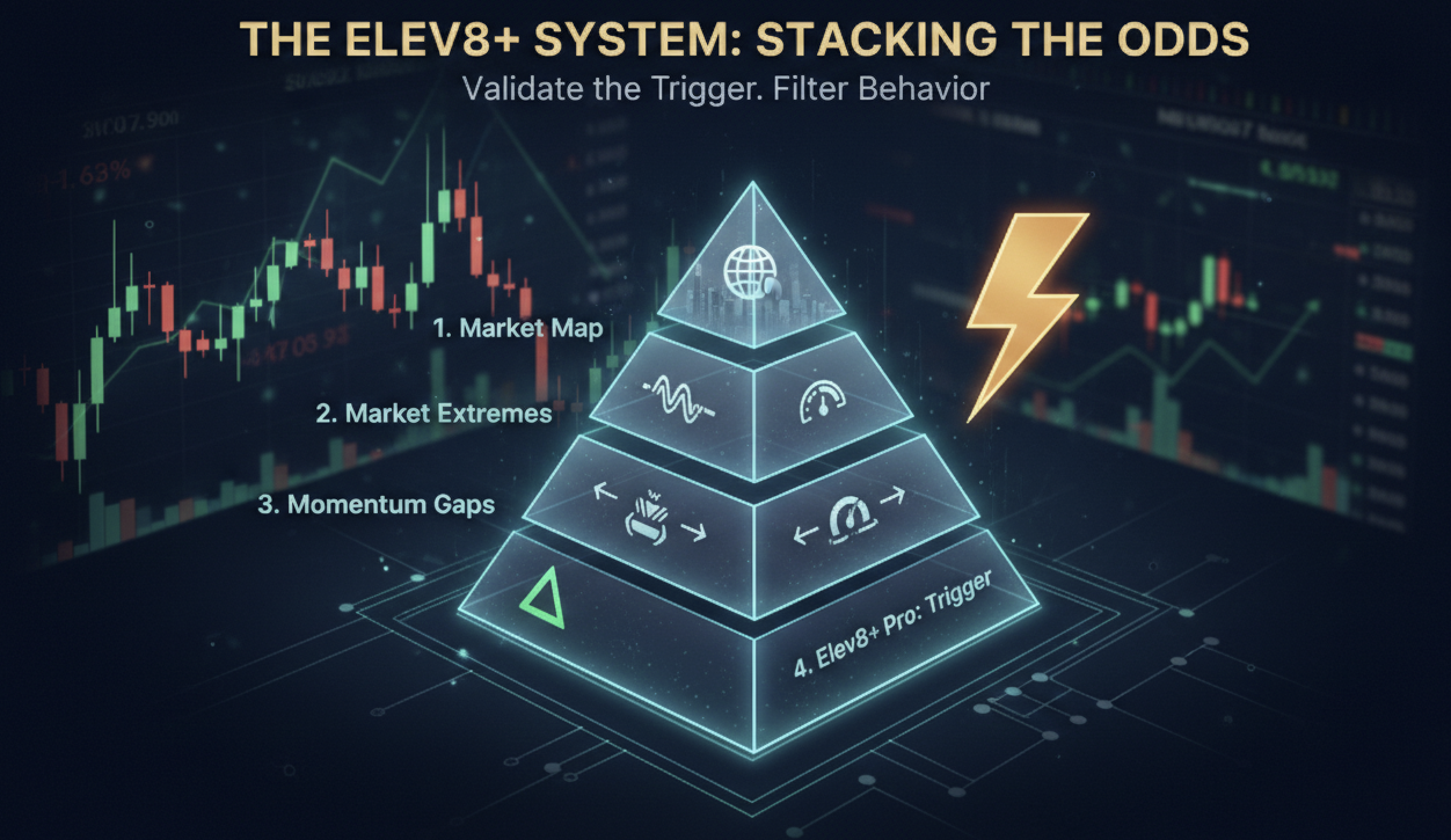
The Elev8+ Confluence Checklist: Stacking the Full Suite for High-Probability Setups
Learning outcome
Learn how to combine location, extension, displacement, reaction zones, and execution confirmation without indicator overload.
Read this lesson →
Optional • Specialized • Module 6
Specialized Applications
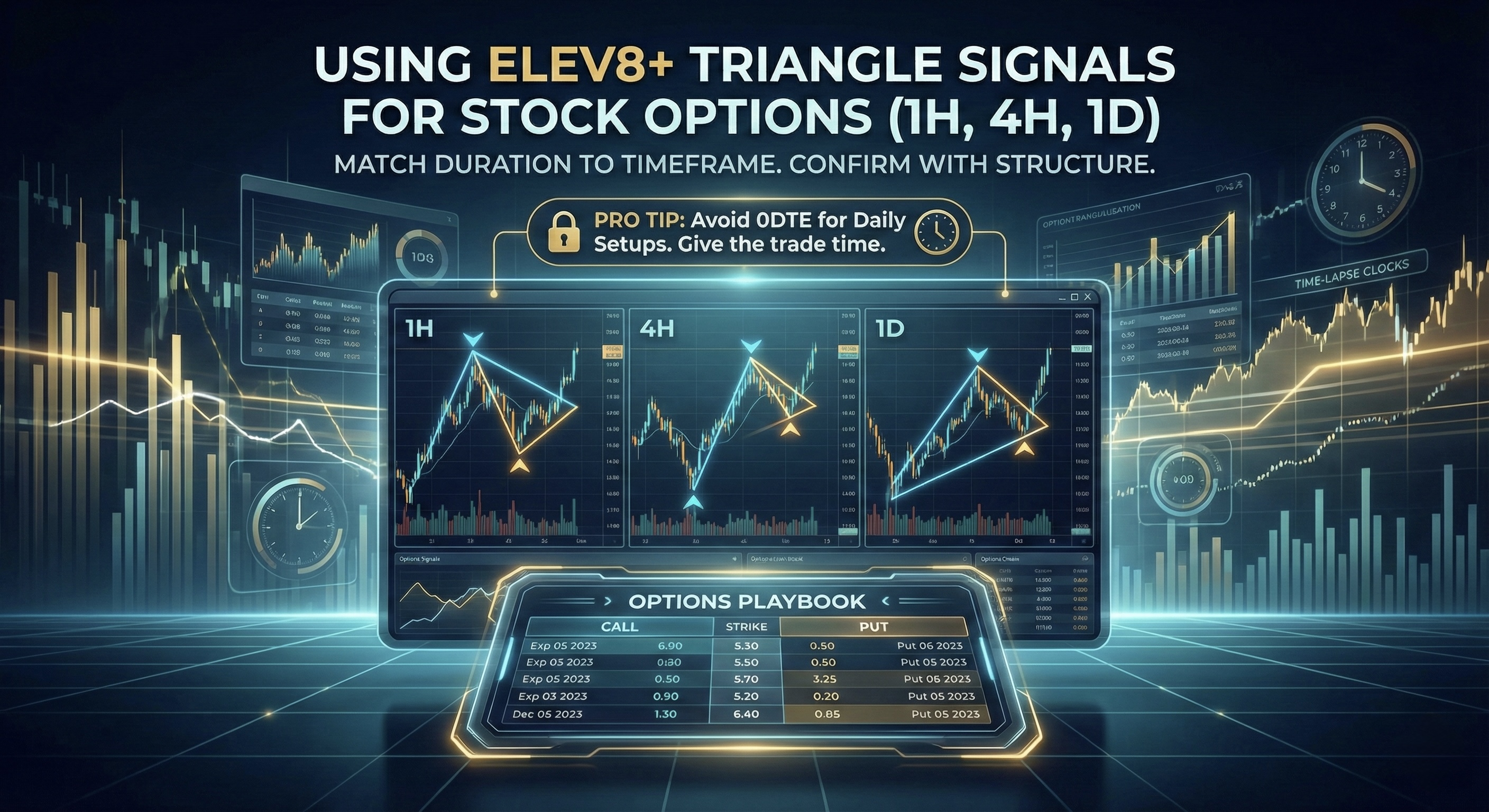
After the core lessons, explore options and longer-term chart analysis.
1 article
Optional • Specialized • Module 6
Specialized Applications
After the core lessons, explore options and longer-term chart analysis.
1 article
Optional • Advanced • Module 7
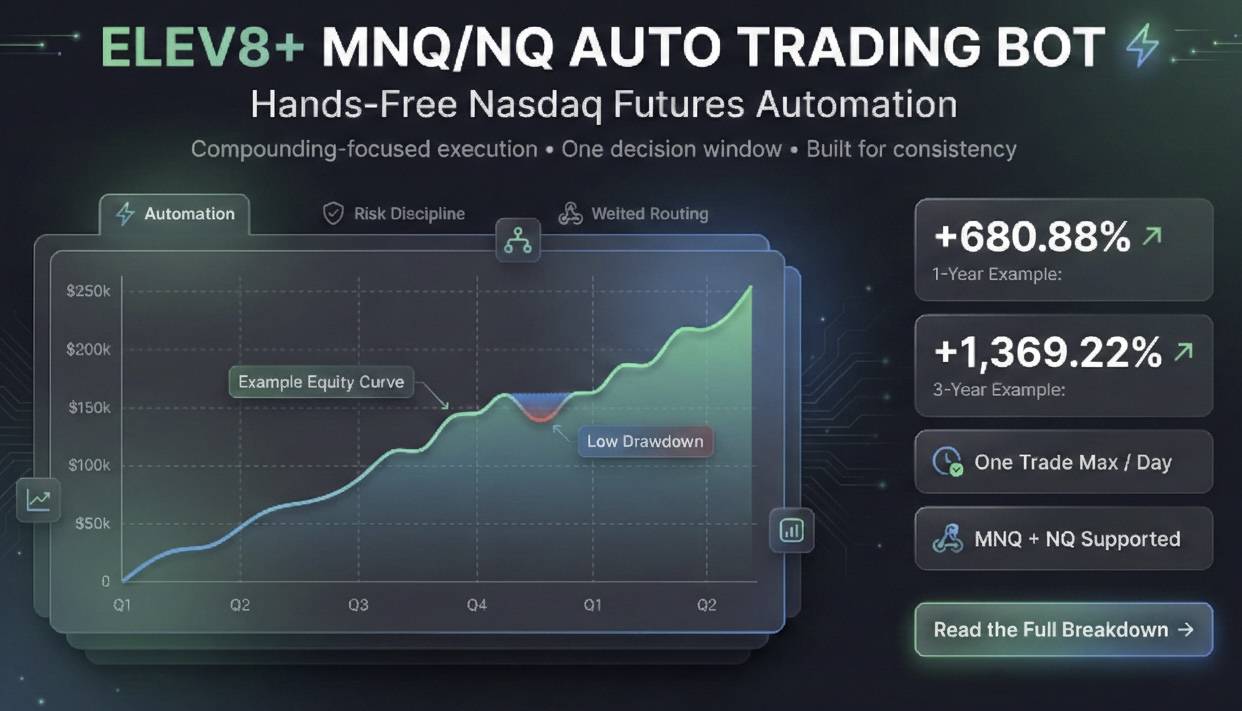
Automation and New Features
Learn the current automation workflow, platform updates, and advanced tools after completing the core lessons.
1 article
Optional • Advanced • Module 7
Automation and New Features
Learn the current automation workflow, platform updates, and advanced tools after completing the core lessons.
1 article
Your Daily Trading Process
Use these six steps to organize your trading routine
Before the session:
Mark key highs, lows, and nearby price levels.
At the level:
Watch whether price returns inside or holds beyond it.
After the response:
Look for a strong move and a break of a relevant swing high or low.
At the retest:
Check that your entry rules are met.
Before entry:
Choose your stop, target, and position size.
After the trade:
Journal what actually happened.
Ready to practice on your charts?
Explore the Elev8+ indicators used in these lessons.
The lessons explain the process. The indicators help you mark key levels, session boundaries, sweeps, and possible entry areas on your charts.