The Problem This Guide Helps You Solve
An exhaustion signal can appear while the trend continues. Separate the warning from the additional conditions required for an entry.
Exhaustion Qualification Process
Work through these checks in order. The examples explain a process; they are not instructions to place a trade.
1. Stretch Context
Confirm price is truly extended relative to session structure.
2. Confluence Check
Require liquidity interaction and failed continuation behavior.
3. Risk-Bounded Entry
Take one defined attempt with strict invalidation.
Exhaustion Scenarios
Late Trend Burst
Final extension fails to hold and reversal setup confirms.
False Exhaustion
Signal appears but trend remains intact, so the setup is skipped.
Common Execution Mistakes To Avoid
-
Countertrading every overbought/oversold reading.
-
Ignoring higher-timeframe context.
-
Taking repeated failed reversal attempts.
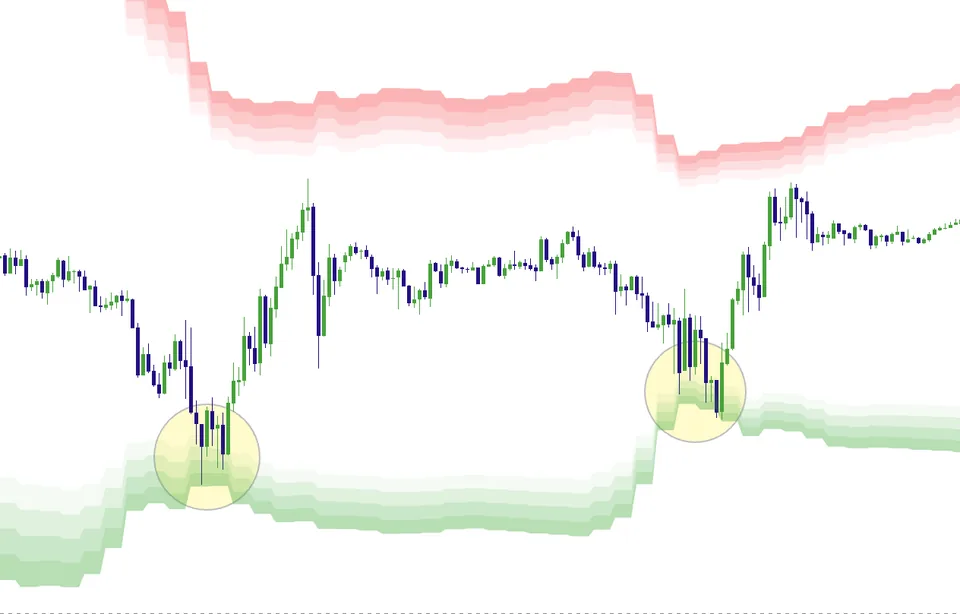
The Elev8+ walkthrough shows the tools on a chart. Use it to compare exhaustion warnings with market direction and the other observations in your plan.
Related Guides
-
The Elev8+ Indicator Suite: What Each Tool Does
Compare the roles of Elev8+ Pro, Market Map, Market Extremes, VWAP Deviation, Reversal Blocks, Real FVG, and Momentum Gaps before building your chart.
-
How to Compare TradingView Reversal Indicators
There is no reversal indicator that works in every market. Compare what triggers the signal, when it appears, and how it behaves during a strong trend.
-
Nasdaq Overextension: When Price Has Moved Far
An overextension reading means price has moved far from a reference such as an average or band. It does not tell you when the trend will end.
-
Futures Reversal Indicators: What Confirms a Turn?
A possible reversal is not a confirmed change in direction. Combine the signal with a price level, an entry condition, and an exit plan before considering a trade.
Further Reading
About this guide
Published by Elev8+ Trading to explain trading concepts and our products. Elev8 sells the tools linked here; these guides are not independent product rankings or personalized financial advice. Chart examples illustrate a process, not audited trading results.
Dates identify substantive content updates, not a claim of independent expert review. Check current exchange, broker, and prop-firm rules before relying on a calculation. Ask a question or report a correction.