The Problem This Guide Helps You Solve
Names for chart patterns are not a trading plan. Write down observable entry and exit rules so you can test the idea and review your decisions.
ICT-Style Process
Work through these checks in order. The examples explain a process; they are not instructions to place a trade.
1. Liquidity Map
Mark likely liquidity pools above and below price.
2. Imbalance Context
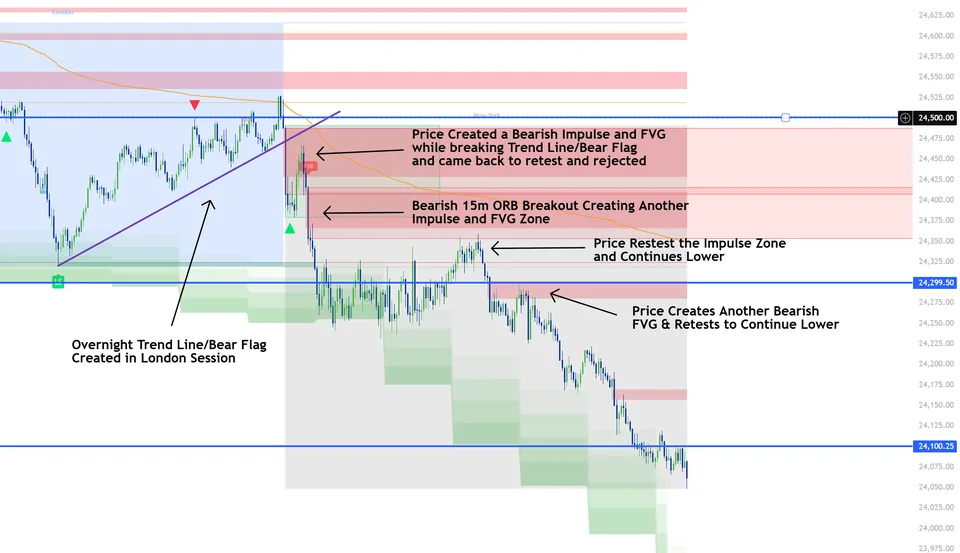
Use FVG and order block behavior near those zones.
3. Confirmation Entry
Take setups only when structure confirms your directional case.
Concept Translation Examples
Sweep + FVG Reclaim
A liquidity grab reclaims through an imbalance and confirms setup quality.
Order Block Continuation
Retest holds and structure continuation confirms trend alignment.
Common Execution Mistakes To Avoid
-
Overloading charts with concept overlays.
-
Taking entries before shift confirmation.
-
Ignoring session timing windows.
Watch the Elev8+ demo to see the actual indicators and their signals. Compare them with your written rules instead of choosing a product solely because it uses familiar terminology.
Related Guides
-
The Elev8+ Indicator Suite: What Each Tool Does
Compare the roles of Elev8+ Pro, Market Map, Market Extremes, VWAP Deviation, Reversal Blocks, Real FVG, and Momentum Gaps before building your chart.
-
TradingView Fair Value Gaps: Identify and Review Zones
A fair value gap describes a three-candle price imbalance. Learn how to review its location and later price reaction without assuming the gap must fill.
-
TradingView Order Blocks: Zones, Retests and Limits
An order-block indicator highlights zones using a defined price pattern. Treat those zones as areas to investigate, not proof of institutional orders or guaranteed support.
-
TradingView Liquidity Sweeps: Read the Signal in Context
A sweep indicator flags moves through prior highs or lows. Check whether price returns through the level or continues beyond it before interpreting the signal.
Further Reading
About this guide
Published by Elev8+ Trading to explain trading concepts and our products. Elev8 sells the tools linked here; these guides are not independent product rankings or personalized financial advice. Chart examples illustrate a process, not audited trading results.
Dates identify substantive content updates, not a claim of independent expert review. Check current exchange, broker, and prop-firm rules before relying on a calculation. Ask a question or report a correction.