Who This Is For
- Traders preparing to connect and test an automated strategy.
- Traders comparing supported accounts, setup requirements, and monitoring tools.
- Traders learning what they need to monitor after connecting.
NQ AI Bot
The label AI does not explain how a trading bot makes decisions. Ask what the model actually does, how its results were tested, and which controls limit its orders.
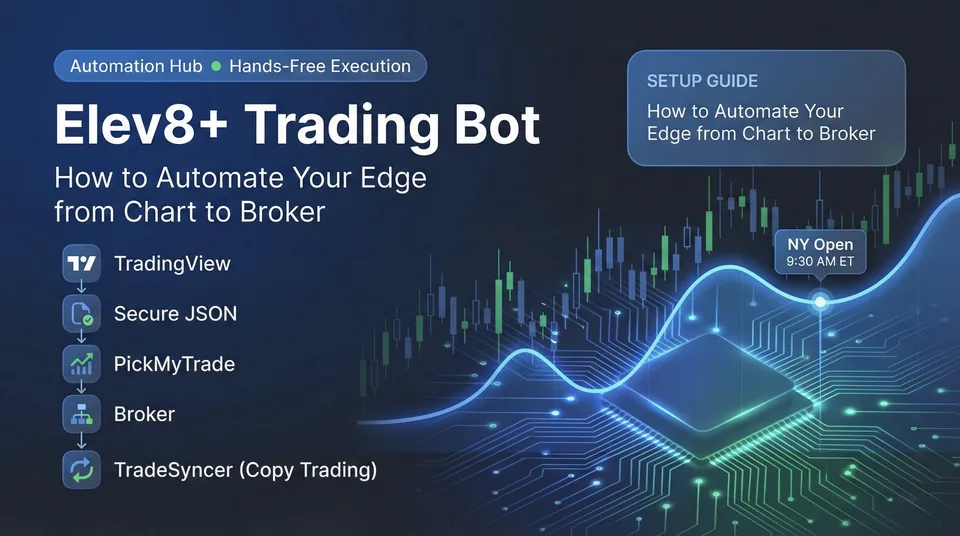
Automated trading illustration.
What You Will Learn
An AI label can obscure whether a system predicts prices, selects setups, or simply summarizes information. Ask for a clear explanation and testable rules.
Work through these checks in order. The examples explain a process; they are not instructions to place a trade.
Separate real capabilities from vague marketing language.
Test setup logic, failure modes, and risk response in controlled conditions.
Use staged size with strict kill-switch controls.
Adaptive logic is paired with transparent controls and strict risk boundaries.
No clear methodology, no risk framework, and inconsistent behavior.
Read the strategy rules and the assumptions behind published results. Then review account compatibility, setup requirements, and monitoring before deciding whether AutoTrader is right for you.
for a closer look before deciding. The guide is free; the software is a separate subscription.
Published by Elev8+ Trading to explain trading concepts and our products. Elev8 sells the tools linked here; these guides are not independent product rankings or personalized financial advice. Chart examples illustrate a process, not audited trading results.
Dates identify substantive content updates, not a claim of independent expert review. Check current exchange, broker, and prop-firm rules before relying on a calculation. Ask a question or report a correction.
Next Step
Check AutoTrader account requirements and setup steps. Use Market Health separately to review current market conditions.
Account connection and setup checklist
Risk checks before increasing contract count