The Problem This Guide Helps You Solve
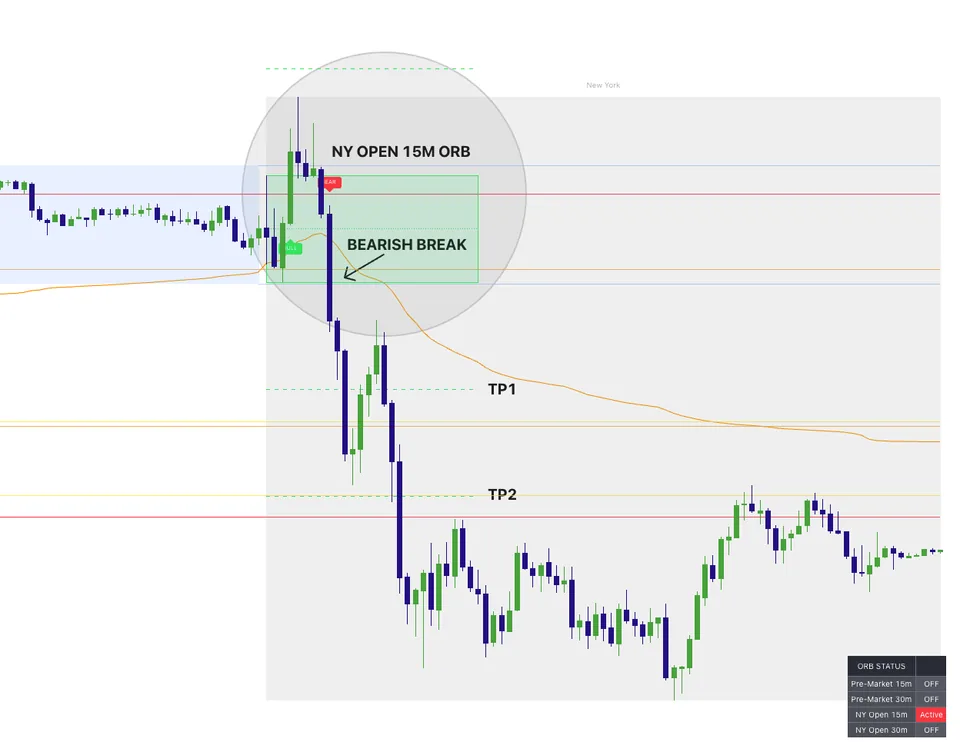
A break outside the opening range can continue or fail. Define the observation period and the price behavior your entry rules require.
ES Opening Range Workflow
Work through these checks in order. The examples explain a process; they are not instructions to place a trade.
1. Define Range
Mark the opening range and nearby session references clearly.
2. Qualify Break
Require breadth, structure, or retest behavior before entry.
3. Manage Risk
Use fixed invalidation and cap attempts during noisy opens.
Opening Range Scenarios
Breakout + Hold
Range break holds with supportive context and confirms continuation structure.
False Breakout
Break fails quickly and rotation logic replaces continuation bias.
Common Execution Mistakes To Avoid
-
Entering on range touch without confirmation.
-
Ignoring failed-break behavior after initial momentum.
-
Running unlimited attempts during the open.
Use the Elev8+ demo to compare the actual indicator suite with your opening-range routine. This guide explains a general chart concept, not a promise that every pattern is a separate product feature.
Related Guides
-
The Elev8+ Indicator Suite: What Each Tool Does
Compare the roles of Elev8+ Pro, Market Map, Market Extremes, VWAP Deviation, Reversal Blocks, Real FVG, and Momentum Gaps before building your chart.
-
Choosing TradingView Indicators for ES Futures
Build an ES chart around a few clear jobs: identify market direction, mark levels, and review possible entries. Decide how each indicator contributes before adding it.
-
ES Market Internals: Read Breadth Alongside Price
Market internals describe activity beneath an index's price move, such as stock participation. Compare that information with ES levels rather than using it alone.
-
How to Build a Futures TradingView Indicator Setup
Give each indicator a clear role: reading the market, marking levels, or identifying a possible entry. Remove tools that repeat information without improving your plan.
Further Reading
About this guide
Published by Elev8+ Trading to explain trading concepts and our products. Elev8 sells the tools linked here; these guides are not independent product rankings or personalized financial advice. Chart examples illustrate a process, not audited trading results.
Dates identify substantive content updates, not a claim of independent expert review. Check current exchange, broker, and prop-firm rules before relying on a calculation. Ask a question or report a correction.