The Problem This Guide Helps You Solve
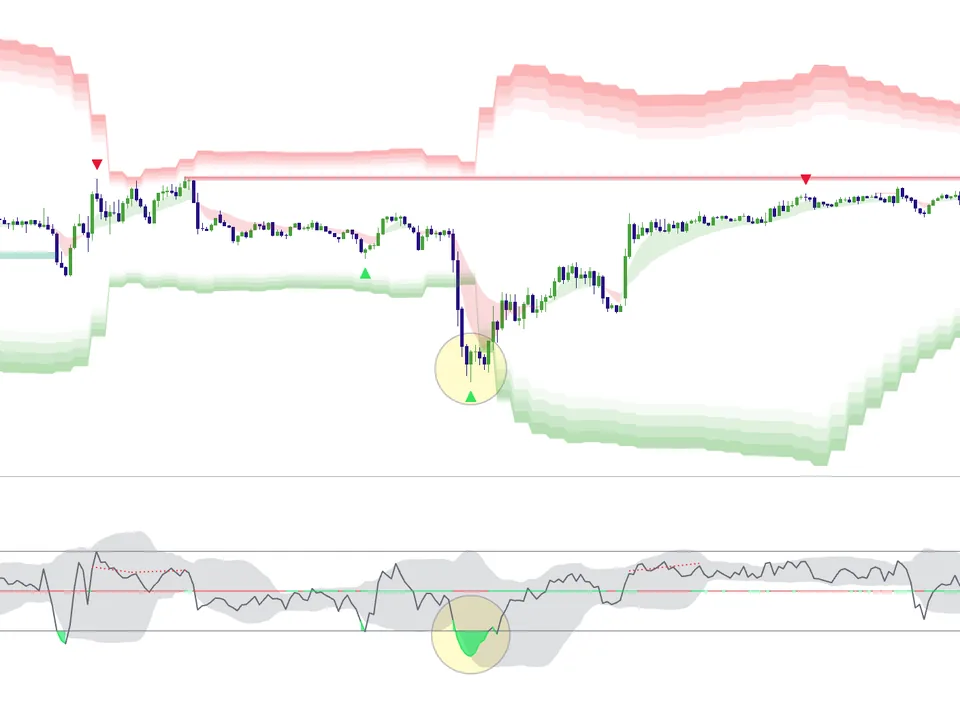
Market Extremes highlights stretched price conditions and helps you assess whether momentum is fading or a trend is persisting. It addresses a common problem: confusing a move that looks extended with evidence that the move has actually ended.
How to use this in your workflow
Work through these checks in order. The examples explain a process; they are not instructions to place a trade.
Read the stretch in context
Compare the displayed exhaustion information with market structure and nearby levels. An extreme reading describes a condition, not a scheduled turning point. Price can remain stretched while a strong trend continues.
Look for a change in behavior
Ask whether price is rejecting a planned area, failing to extend, or continuing to hold beyond it. Use the tool's context alongside observable price action rather than selling simply because a reading is high or buying because it is low.
Review rejected ideas too
Keep examples where the market stayed extended as well as examples where it reversed. That review helps separate a useful context observation from an overly simple rule that treats every extreme as an entry.
Examples and limits
A hypothetical chart-reading example
Suppose price is extended near a previously identified level. If it continues to hold above that level, fading the move needs more justification than the extension alone. A failed push and return through the level would be a different sequence to evaluate against your rules.
What this tool cannot tell you
Exhaustion information cannot identify the exact high or low in advance. A strong trend can persist, and apparent divergence does not guarantee that a reversal will occur before your stop is reached.
Common Execution Mistakes To Avoid
-
Treating a historical example as a promised future outcome.
-
Adding a tool without understanding which decision it supports.
See where Market Extremes fits into the Elev8+ workflow, then compare the current indicator plans on the suite page. Start with the free lessons if you want more explanation before deciding.
Related Guides
-
The Elev8+ Indicator Suite: What Each Tool Does
Compare the roles of Elev8+ Pro, Market Map, Market Extremes, VWAP Deviation, Reversal Blocks, Real FVG, and Momentum Gaps before building your chart.
-
TradingView Exhaustion Indicators: Read the Warning
Exhaustion indicators flag conditions that may suggest a move is stretched or slowing. A warning is a reason to review price action, not an automatic reversal trade.
-
VWAP Deviation: Value, Extension and Price Acceptance
Learn how Elev8+ VWAP Deviation shows distance from volume-weighted average price, and how to distinguish a possible return toward value from continued extension.
-
ES Opening Range Indicators: Breakouts and Failed Breaks
An opening range marks the high and low of a chosen opening period. Learn to assess a break of that range without treating every move outside it as an entry.
Further Reading
About this guide
Published by Elev8+ Trading to explain trading concepts and our products. Elev8 sells the tools linked here; these guides are not independent product rankings or personalized financial advice. Chart examples illustrate a process, not audited trading results.
Dates identify substantive content updates, not a claim of independent expert review. Check current exchange, broker, and prop-firm rules before relying on a calculation. Ask a question or report a correction.